










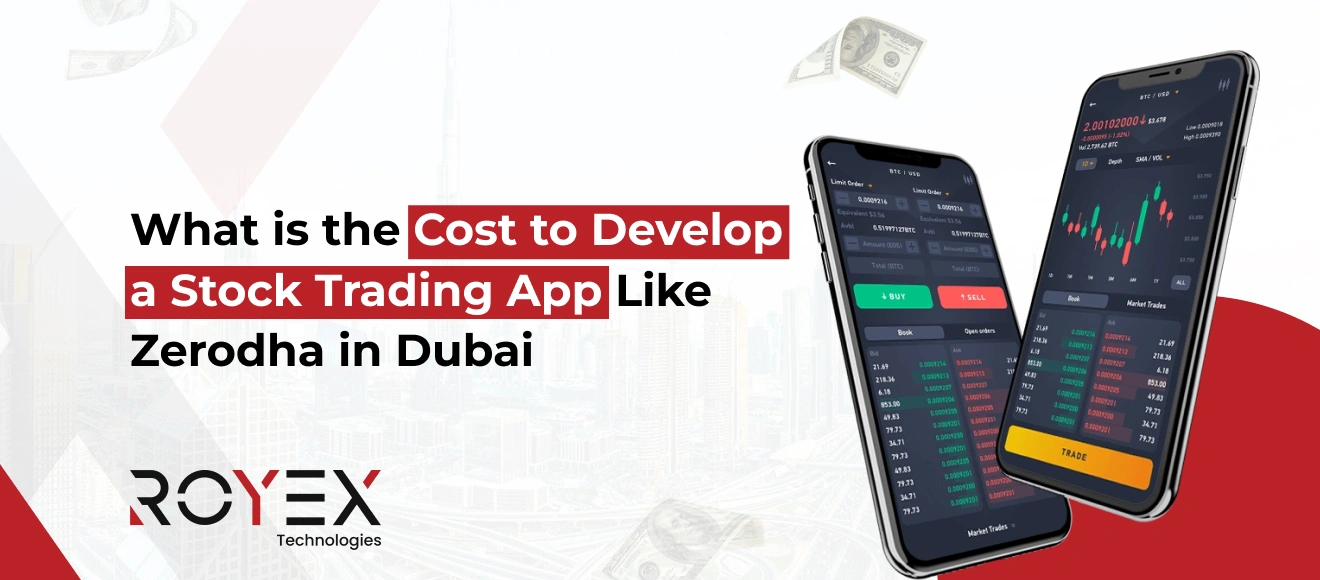
What is the Cost to Develop a Stock Trading App Like Zerodha in Dubai
Stock trading apps have transformed how individuals participate in financial markets by making investing accessible, affordable, and mobile-first. Platforms like Zerodha have disrupted traditional brokerage models through simplified trading experiences, low-cost investing, real-time analytics, and powerful portfolio management tools.
In Dubai and across the UAE, digital investing is growing rapidly as users become more financially aware and increasingly interested in stocks, ETFs, mutual funds, and global financial markets. Investors now expect seamless mobile trading experiences with real-time data, advanced charting, and secure financial infrastructure.
This growing demand is encouraging businesses to work with a mobile apps development company Dubai to build scalable, secure, and regulation-ready trading platforms designed for modern investors.
This article explores the features, architecture, development process, monetization strategies, challenges, and cost of building a Zerodha-like stock trading platform in Dubai.
Why Stock Trading Apps Are Growing in Dubai
Rising Retail Investor Participation
More users in Dubai are actively participating in stock markets due to growing financial awareness, easier access to investing tools, and increased interest in wealth creation through digital platforms.
Growth of Digital Banking and Fintech
The UAE’s rapid fintech adoption has created an ecosystem where users are comfortable managing finances, investments, and trading activities through mobile applications.
Demand for Real-Time Financial Access
Modern investors expect instant market access, real-time price tracking, and advanced trading tools that allow them to react quickly to market movements from anywhere.
Key Features of a Stock Trading App Like Zerodha
User Registration and KYC Verification
The platform should provide seamless onboarding with digital identity verification, AML compliance, and secure document uploads to ensure regulatory compliance.
Real-Time Stock Trading
Users must be able to buy and sell stocks, ETFs, and other financial instruments with real-time order execution and live pricing data.
Portfolio Management Dashboard
The app should provide a detailed overview of investments, holdings, profit/loss tracking, asset allocation, and historical performance.
Advanced Market Data and Watchlists
Users should have access to live stock prices, market depth, personalized watchlists, alerts, and financial news integration.
Advanced Features for Modern Trading Platforms
AI-Based Investment Insights
Artificial intelligence can analyze market trends, trading patterns, and user behavior to generate investment recommendations and predictive insights.
Advanced Trading Charts and Indicators
Professional traders require candlestick charts, technical indicators, trend analysis tools, and customizable chart layouts for market analysis.
Automated Investing and Robo-Advisory
The platform can offer automated portfolio creation and investment strategies based on risk appetite and financial goals.
Margin Trading and Derivatives Support
Advanced users may require futures, options, leverage trading, and margin-based investment features.
Admin Panel Features
User and Compliance Management
Admins manage KYC approvals, user verification, suspicious activity monitoring, and compliance reporting.
Trading and Transaction Monitoring
The system tracks trade execution, order flow, transaction history, and settlement activities in real time.
Brokerage and Fee Management
Admins can configure brokerage fees, commissions, and transaction charges across different investment products.
Analytics and Financial Reporting
Provides insights into trading volume, user engagement, revenue performance, and investment trends.
Technology Stack
Frontend
- Flutter for mobile applications
- React for web trading dashboards
- Native Swift and Kotlin for performance-critical modules
Backend
- Node.js
- Django
- Go for high-frequency trading infrastructure
Fintech Infrastructure
- Real-time market data APIs
- Trading engine integrations
- Secure encryption standards
- KYC/AML compliance systems
Cloud Infrastructure
- AWS
- Google Cloud Platform
- Azure
Development Process
Discovery Phase
Defines investment instruments, trading workflows, regulatory requirements, and target investor segments.
UI/UX Design
Focuses on trust-building interfaces, real-time responsiveness, and clean trading experiences for both beginner and advanced investors.
MVP Development
Includes onboarding, basic stock trading, portfolio tracking, and market watchlists.
Full Product Development
Adds AI insights, advanced charting tools, derivatives trading, and robo-advisory systems.
Cost to Develop a Stock Trading App Like Zerodha in Dubai
Basic MVP
AED 150,000 – AED 300,000
Includes onboarding, stock trading, watchlists, and portfolio tracking.
Mid-Level Platform
AED 300,000 – AED 700,000
Includes advanced charts, AI insights, real-time trading systems, and analytics.
Enterprise Trading Platform
AED 700,000 – AED 2,000,000+
Includes high-frequency trading infrastructure, derivatives support, robo-advisory, and enterprise-grade compliance systems.
Monetization Strategies
Stock trading platforms typically generate revenue through brokerage fees charged per trade or as a percentage of transaction value. Even low-cost brokerage models can become highly profitable at scale due to large trading volumes.
Another major revenue stream comes from premium subscription plans that offer advanced charting tools, AI-powered trading insights, priority execution, and enhanced analytics for professional traders.
Margin trading and leveraged investment products can also create significant revenue through interest charges and financing fees. Additionally, platforms may partner with financial institutions, mutual fund providers, and investment firms for distribution commissions and product listings.
Over time, educational content, premium investor communities, and API-based trading tools for institutional clients can further diversify monetization opportunities.
Challenges
One of the biggest challenges in building a stock trading app is ensuring regulatory compliance with financial authorities and trading regulations. Any failure in compliance can lead to severe legal and operational consequences.
Another critical challenge is building a low-latency trading infrastructure capable of processing real-time orders instantly and accurately, especially during high market volatility.
Security is equally important because trading platforms handle highly sensitive financial data and user funds. Strong encryption, multi-factor authentication, and fraud detection systems are mandatory.
Additionally, maintaining user trust is essential, as investors rely heavily on platform stability, transparency, and accurate market information when making financial decisions.
Why Dubai Is Ideal for Fintech Trading Platforms
Dubai is rapidly becoming a global fintech hub with strong regulatory support, advanced banking infrastructure, and a growing investor population. The city’s financially active and digitally connected audience creates strong demand for modern trading platforms.
The UAE government’s push toward digital finance and innovation further supports fintech growth, while Dubai’s strategic position as a global business center allows trading platforms to scale across international markets.
Additionally, the region’s high disposable income and increasing interest in wealth management make Dubai an ideal environment for investment-focused applications.
Why Businesses Choose Royex
Businesses prefer working with a mobile app development company in dubai because building a stock trading platform like Zerodha requires expertise in real-time financial systems, high-performance trading infrastructure, regulatory compliance, and enterprise-grade security architecture.
Royex specializes in developing scalable fintech ecosystems capable of handling live market data, instant order execution, secure transaction processing, and AI-powered investment analytics. The company focuses on building robust and reliable trading systems that maintain performance even during periods of high trading activity and market volatility.
Royex also integrates advanced capabilities such as algorithmic trading support, portfolio analytics, robo-advisory systems, and secure third-party financial integrations. This enables businesses to launch modern investment platforms that serve both beginner and professional investors effectively.
Most importantly, Royex combines strong technical expertise with user-centric product design, ensuring the final platform is secure, scalable, intuitive, and optimized for long-term fintech growth in Dubai and global markets.
Conclusion
Developing a Zerodha-like stock trading app in Dubai presents a major opportunity in the rapidly expanding fintech and digital investment sector. With increasing retail investor participation and strong fintech adoption, businesses can create powerful platforms that simplify investing and wealth management.
A successful trading platform requires secure infrastructure, real-time execution systems, regulatory compliance, and advanced analytics capabilities. With the right development partner, businesses can build next-generation investment ecosystems that redefine digital trading experiences in the UAE and beyond.