










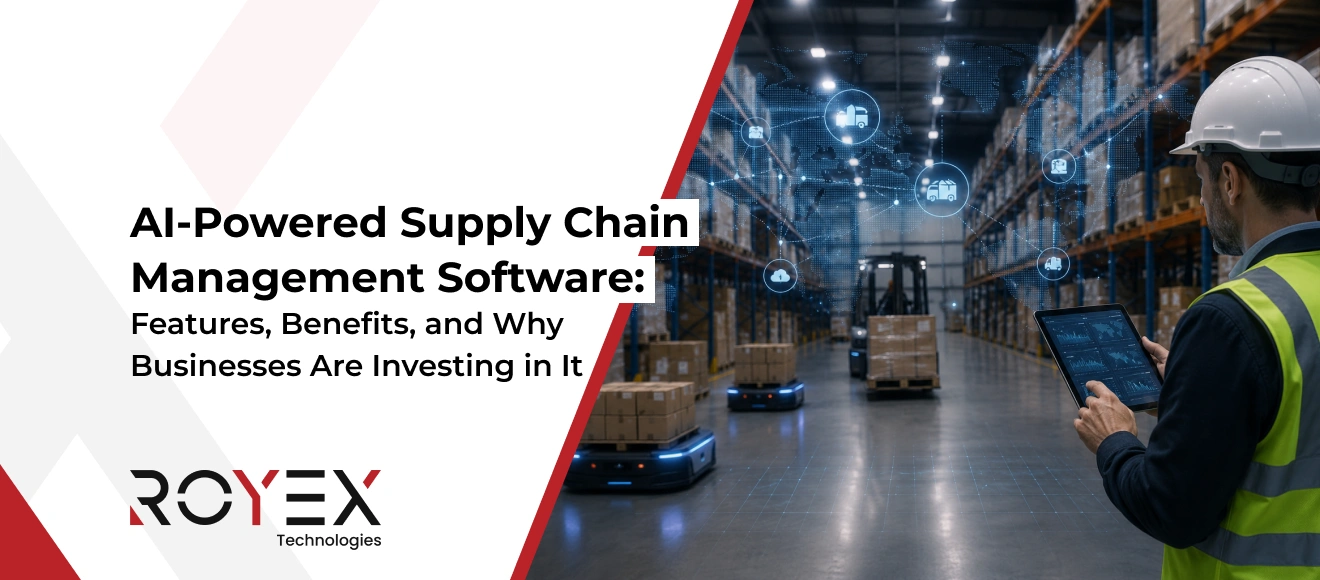
AI-Powered Supply Chain Management Software: Features, Benefits, and Why Businesses Are Investing in It
Supply chains have become more complex than ever before. Businesses today must manage suppliers, inventory, procurement, warehousing, transportation, and order fulfillment while meeting increasing customer expectations for speed and accuracy. Relying on spreadsheets or disconnected systems often results in delays, inventory shortages, higher operational costs, and poor visibility across the supply chain.
This is where AI-powered Supply Chain Management software is transforming business operations. By combining automation, real-time data, predictive analytics, and artificial intelligence, businesses can streamline their entire supply chain from procurement to final delivery. Instead of reacting to problems after they occur, organizations can make proactive, data-driven decisions that improve efficiency and reduce costs.
Dubai's position as a global logistics and trade hub has accelerated the adoption of digital supply chain solutions across industries such as manufacturing, retail, wholesale, healthcare, construction, and eCommerce. As businesses continue to embrace digital transformation, intelligent supply chain software has become a strategic investment rather than just an operational tool.
What Is Supply Chain Management Software?
Supply Chain Management (SCM) software is an integrated platform that helps businesses manage every stage of the supply chain through a centralized system. It connects procurement, supplier management, inventory control, warehouse operations, logistics, and order fulfillment into one unified ecosystem.
Rather than relying on multiple standalone applications, businesses gain complete visibility into their operations through a single dashboard. This enables departments to collaborate more effectively while reducing manual work, minimizing errors, and improving decision-making.
When enhanced with artificial intelligence, supply chain software becomes even more powerful by forecasting demand, optimizing inventory, automating procurement decisions, and identifying operational risks before they impact the business.
Key Features of AI-Powered Supply Chain Management Software
Intelligent Procurement Management
Procurement modules automate purchase requests, approval workflows, supplier quotations, and purchase order generation. AI can also recommend the best suppliers based on historical pricing, delivery performance, product quality, and contract terms.
Real-Time Inventory Management
Businesses can monitor inventory levels across multiple warehouses in real time, ensuring accurate stock visibility at all times.
Common features include:
- Live inventory tracking
- Automatic stock updates
- Low inventory alerts
- Batch and serial number management
- Inventory forecasting
- Multi-location inventory management
Smart Warehouse Management
Warehouse operations become significantly more efficient through automation.
Key capabilities include:
- Barcode and QR code scanning
- Bin and rack management
- Receiving and dispatch workflows
- Picking and packing optimization
- Warehouse productivity reporting
These features reduce manual errors while improving warehouse efficiency.
Supplier Relationship Management
Businesses can maintain detailed supplier profiles that include certifications, pricing agreements, contracts, delivery performance, and communication history.
Performance scorecards help procurement teams evaluate suppliers based on delivery timelines, quality standards, and reliability.
Order and Fulfillment Management
The software manages customer orders from creation through delivery.
Businesses can monitor:
- Sales orders
- Order fulfillment
- Shipment status
- Delivery tracking
- Returns management
- Customer service performance
This improves order accuracy while enhancing customer satisfaction.
Business Intelligence Dashboards
Executives gain access to real-time reports covering procurement spending, inventory turnover, warehouse performance, supplier KPIs, logistics efficiency, revenue, profitability, and supply chain bottlenecks. These dashboards enable faster and more informed business decisions.
How Artificial Intelligence Is Transforming Supply Chain Management
Predictive Demand Forecasting
AI analyzes historical sales patterns, seasonal demand, market trends, and customer behavior to accurately forecast inventory requirements. This reduces both stock shortages and excess inventory.
Automated Procurement
Artificial intelligence can automatically recommend purchase quantities, reorder timing, and supplier selection based on inventory levels and demand forecasts.
Inventory Optimization
Machine learning continuously analyzes stock movement to recommend optimal inventory levels while reducing carrying costs.
Logistics Optimization
AI evaluates traffic conditions, delivery routes, fuel consumption, and warehouse locations to improve transportation efficiency.
Risk Detection
Intelligent systems can identify supply chain disruptions, supplier delays, unusual purchasing patterns, and inventory risks before they become major operational issues.
Benefits of Supply Chain Management Software
Improved Operational Efficiency
Automation reduces repetitive administrative tasks, allowing employees to focus on strategic activities that add greater business value.
Reduced Operational Costs
Better inventory planning, optimized procurement, and improved logistics contribute to significant cost savings over time.
Enhanced Visibility
Businesses gain complete visibility into procurement, inventory, suppliers, warehouses, and deliveries through centralized dashboards.
Faster Decision-Making
Real-time analytics enable managers to respond quickly to operational issues and market changes.
Better Supplier Collaboration
Centralized supplier information improves communication, performance tracking, and long-term vendor relationships.
Higher Customer Satisfaction
Accurate inventory management and faster fulfillment lead to improved delivery performance and a better customer experience.
Emerging Trends in Supply Chain Technology
AI-Driven Decision Making
Businesses are increasingly relying on AI to automate procurement decisions, demand forecasting, and inventory optimization.
Internet of Things (IoT)
Connected devices provide real-time tracking of inventory, warehouse conditions, delivery vehicles, and equipment performance.
Cloud-Based Supply Chains
Cloud deployment enables remote access, faster collaboration, automatic updates, and lower infrastructure costs.
Warehouse Automation
Robotics, automated storage systems, and intelligent picking technologies are helping warehouses improve speed and accuracy.
Sustainable Supply Chains
Organizations are using digital platforms to monitor carbon emissions, reduce waste, optimize transportation routes, and improve sustainability initiatives.
Common Challenges When Implementing Supply Chain Software
Integrating Existing Systems
Many businesses already use ERP, accounting, CRM, and warehouse systems. Seamless integration is essential for creating a unified operational ecosystem.
Data Quality
AI-powered insights depend on accurate data. Maintaining clean inventory records, supplier information, and procurement data is critical for success.
Employee Adoption
Introducing new technology requires proper training, intuitive user interfaces, and effective change management to ensure employees embrace the platform.
Custom Business Processes
Every organization has unique procurement workflows, warehouse operations, and approval structures. The software must be flexible enough to accommodate these requirements without compromising performance.
Scaling Operations
As businesses expand into new markets, warehouses, or product lines, the platform must support increasing transaction volumes, users, and operational complexity while maintaining speed and reliability.
Why Dubai Is an Ideal Market for Supply Chain Management Software
Global Trade and Logistics Hub
Dubai serves as a strategic gateway connecting businesses across Asia, Europe, and Africa, making efficient supply chain management a competitive necessity.
Thriving eCommerce Sector
The rapid growth of online retail continues to drive demand for advanced inventory, warehouse, and logistics management solutions.
Government-Led Digital Transformation
The UAE actively encourages businesses to adopt smart technologies, automation, and AI to improve operational efficiency and competitiveness.
Advanced Infrastructure
Dubai's world-class ports, airports, free zones, and transportation networks provide the ideal foundation for digitally connected supply chains.
Strong Enterprise Adoption of AI
Organizations across manufacturing, retail, healthcare, and logistics are increasingly investing in AI-powered enterprise software to improve decision-making and operational performance.
How SupplyNet by Royex Can Transform Your Supply Chain Operations
Managing today's complex supply chains requires more than standalone tools—it demands an intelligent platform that brings procurement, inventory, warehousing, logistics, and supplier management together. With AI-powered Supply Chain Management software development in Dubai, businesses can streamline operations, improve visibility, and make faster, data-driven decisions across every stage of the supply chain.
SupplyNet by Royex is designed to help organizations digitize and automate their entire supply chain ecosystem. From procurement workflows and supplier management to inventory control, warehouse operations, and order fulfillment, the platform centralizes critical business processes into one secure and scalable solution. By leveraging AI-powered forecasting, automated procurement, real-time inventory tracking, and advanced analytics, businesses can reduce operational costs, minimize manual errors, and improve overall efficiency.
Whether you're a manufacturer, distributor, wholesaler, retailer, or logistics provider, SupplyNet can be customized to fit your unique business processes and seamlessly integrate with your existing ERP, CRM, accounting, and warehouse management systems. Built with scalability in mind, it empowers businesses to adapt to changing market demands while maintaining complete control over their supply chain operations.
Conclusion
Supply chain management is no longer just about moving products from one location to another. It has evolved into a strategic function that directly influences profitability, customer satisfaction, operational efficiency, and long-term business success.
AI-powered supply chain management software enables organizations to automate routine processes, optimize inventory, strengthen supplier relationships, improve logistics, and make smarter decisions using real-time data and predictive insights.
For businesses operating in Dubai's fast-paced and highly competitive market, investing in intelligent supply chain technology provides a significant competitive advantage. By embracing digital transformation today, organizations can build more resilient, efficient, and scalable supply chains that are ready for the future.