



SERVICES
PRODUCTS
BLOGS
Gallery
Case Studies
Events
Testimonials
We are hiring





Enquiry


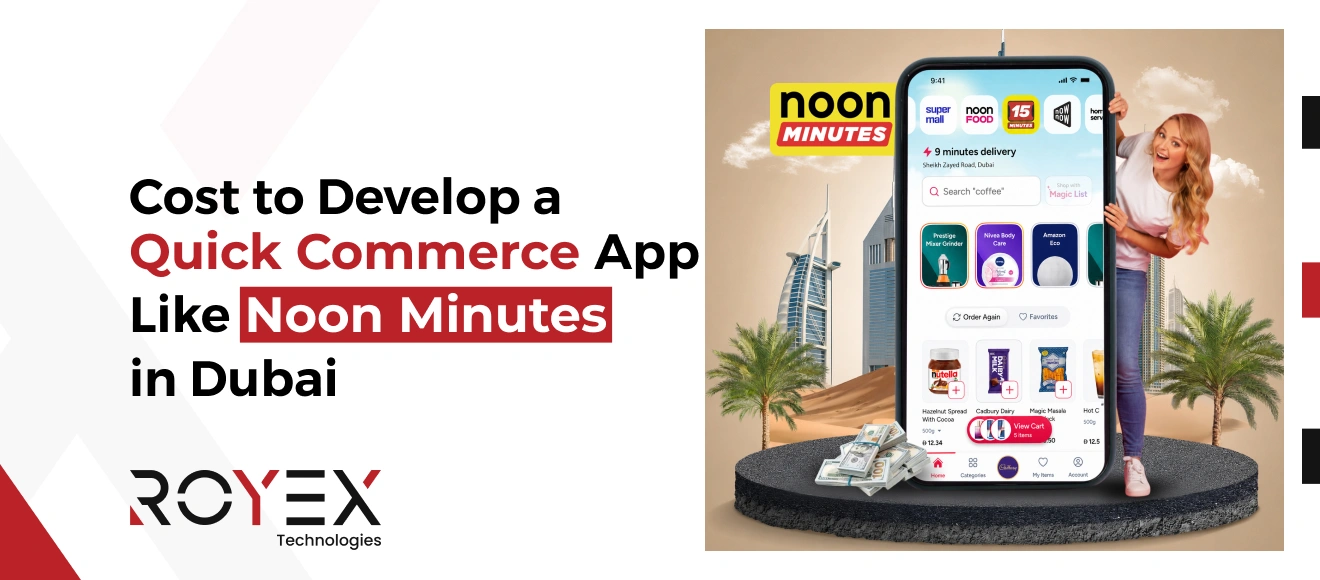
Cost to Develop a Quick Commerce App Like Noon Minutes in Dubai
Quick commerce is revolutionizing the retail and delivery industry by enabling customers to receive groceries, household essentials, personal care products, and daily necessities within minutes. Apps like Noon Minutes have transformed consumer expectations by offering ultra-fast deliveries backed by sophisticated logistics networks, dark stores, and intelligent inventory management systems.
In Dubai, where convenience and speed play a significant role in consumer purchasing behavior, quick commerce platforms are experiencing tremendous growth. Modern consumers increasingly expect products to be delivered in less than 30 minutes, creating strong opportunities for businesses entering the rapid delivery market.
Many entrepreneurs and retail businesses partner with a mobile app development company in Dubai to build high-performance quick commerce platforms capable of handling thousands of simultaneous orders, real-time inventory updates, and complex delivery operations.
This article explores the features, development process, technology stack, monetization opportunities, challenges, and estimated cost of developing an app like Noon Minutes in Dubai.
Why Quick Commerce Apps Are Growing in Dubai
Rising Consumer Demand for Convenience
Consumers today value convenience more than ever. Rather than visiting supermarkets or convenience stores, users prefer ordering products directly from their smartphones and receiving them within minutes.
High Smartphone Penetration
Dubai has one of the highest smartphone adoption rates globally, making mobile-first delivery services highly accessible to residents and tourists alike.
Urban Infrastructure Supports Fast Deliveries
Dubai's well-developed road networks and densely populated residential communities make rapid delivery operations more efficient compared to many global cities.
Growth of Digital Payments
The widespread adoption of digital wallets, online banking, and contactless payment systems has accelerated the growth of app-based commerce platforms.
Key Features of a Quick Commerce App Like Noon Minutes
Customer App Features
Product Browsing
Users can search and browse products across multiple categories including groceries, beverages, snacks, personal care items, and household essentials.
Smart Search Functionality
Advanced search filters help customers quickly locate products based on category, brand, price, or availability.
Real-Time Order Tracking
Customers can track their deliveries from order confirmation through final delivery using live GPS tracking.
Multiple Payment Methods
The platform should support credit cards, debit cards, Apple Pay, Google Pay, digital wallets, and cash-on-delivery options.
Delivery Partner Features
Order Assignment System
Delivery agents receive nearby delivery requests automatically based on location and availability.
Route Optimization
GPS-powered route optimization helps delivery partners complete orders efficiently.
Earnings Dashboard
Delivery personnel can monitor completed deliveries, earnings, incentives, and performance metrics.
Admin Features
Inventory Management
Administrators can monitor stock levels across multiple warehouses and dark stores.
Order Monitoring
Real-time order tracking allows administrators to oversee delivery operations and resolve issues quickly.
User Management
Admins can manage customers, vendors, delivery partners, and support staff.
Advanced Features for Modern Quick Commerce Platforms
AI-Powered Demand Forecasting
Artificial intelligence can analyze purchasing patterns, seasonal demand, and inventory turnover to predict future stock requirements.
Smart Inventory Management
Automated inventory systems help prevent stockouts and improve warehouse efficiency.
Personalized Recommendations
AI algorithms recommend products based on previous purchases, browsing history, and customer preferences.
Dynamic Delivery Allocation
The system intelligently assigns delivery personnel based on location, workload, and delivery urgency.
Loyalty and Rewards Programs
Reward systems encourage repeat purchases through points, discounts, cashback, and exclusive promotions.
Technology Stack
Mobile Development
- Flutter
- React Native
- Swift
- Kotlin
Backend Development
- Node.js
- Django
- Laravel
Database
- PostgreSQL
- MongoDB
- Redis
Cloud Infrastructure
- AWS
- Google Cloud
- Microsoft Azure
Third-Party Integrations
- Payment gateways
- GPS mapping services
- SMS notifications
- Push notification systems
- Inventory management tools
Development Process
Discovery and Planning
The development process begins with defining business goals, delivery coverage areas, warehouse strategies, and operational workflows.
UI/UX Design
Designers create intuitive user interfaces that simplify product discovery, ordering, and tracking experiences.
MVP Development
The minimum viable product typically includes product listings, shopping cart functionality, payment processing, and delivery tracking.
Full Scale Development
Additional features such as AI recommendations, loyalty programs, inventory automation, and advanced analytics are added during later development phases.
Testing and Deployment
Extensive testing ensures platform stability, security, and performance before launch.
Cost to Develop a Quick Commerce App Like Noon Minutes in Dubai
Basic MVP
AED 120,000 – AED 250,000
Includes customer app, delivery app, admin panel, payment integration, and basic order management.
Mid-Level Platform
AED 250,000 – AED 600,000
Includes inventory management, loyalty programs, analytics dashboards, and advanced logistics functionality.
Enterprise-Level Platform
AED 600,000 – AED 1,800,000+
Includes AI-powered forecasting, multi-warehouse management, automated inventory systems, and large-scale delivery infrastructure.
Monetization Strategies
Product Sales Margins
The primary revenue stream comes from product markups and retail margins on items sold through the platform. As order volume increases, businesses can negotiate better wholesale pricing and improve profitability.
Delivery Charges
Platforms can charge delivery fees based on distance, order value, delivery speed, or peak-demand periods. Premium express delivery options can generate additional revenue.
Subscription Programs
Membership plans offering free deliveries, exclusive discounts, and priority delivery services create recurring revenue while improving customer retention.
Vendor Partnerships
Brands and suppliers can pay for premium product placement, sponsored listings, and featured promotions within the app.
Advertising Opportunities
Retail brands frequently invest in targeted advertising campaigns to increase visibility among active shoppers.
Data-Driven Insights
Aggregated purchasing trends and consumer behavior analytics can create additional partnership opportunities with manufacturers and retail suppliers.
Challenges
Managing Rapid Delivery Expectations
Customers expect deliveries within extremely short timeframes. Meeting these expectations consistently requires sophisticated logistics operations and strategic warehouse placement.
Inventory Accuracy
Maintaining real-time inventory visibility across multiple fulfillment centers can be challenging, particularly during high-demand periods.
Delivery Fleet Optimization
Balancing delivery personnel availability with fluctuating order demand is critical to maintaining profitability and service quality.
Customer Retention
The quick commerce market is highly competitive. Platforms must continuously invest in user experience, promotions, and loyalty programs to retain customers.
Scalability
As the platform grows, infrastructure must support increasing order volumes, inventory complexity, and geographic expansion without sacrificing performance.
Why Dubai Is Ideal for Quick Commerce Platforms
Dense Urban Population
Dubai's concentrated residential communities enable efficient delivery routes and reduced transportation times.
Strong Consumer Spending Power
Residents have high purchasing power and are willing to pay for convenience-focused services that save time.
Advanced Logistics Infrastructure
Dubai's transportation networks, warehousing facilities, and smart city initiatives support efficient delivery operations.
Growing eCommerce Ecosystem
The UAE continues to experience strong growth in online shopping, creating favorable conditions for quick commerce businesses.
Technology-Driven Consumers
Consumers in Dubai rapidly adopt new technologies and digital services, making it easier for innovative platforms to gain traction.
Why Businesses Choose Royex
Businesses prefer working with an app development company in Dubai because developing a quick commerce platform like Noon Minutes requires expertise in real-time inventory systems, delivery logistics, cloud scalability, and high-performance mobile applications.
Royex specializes in building complex on-demand commerce ecosystems that combine customer apps, delivery management systems, vendor dashboards, and centralized administration tools into a unified platform. This enables businesses to efficiently manage large-scale operations while maintaining exceptional customer experiences.
The company also develops advanced features such as AI-powered demand forecasting, route optimization systems, personalized recommendation engines, loyalty programs, and automated inventory management. These capabilities help businesses improve operational efficiency and maximize profitability.
Royex follows a scalable architecture approach that allows platforms to expand into new delivery zones, product categories, and markets without major technical limitations.
Most importantly, Royex focuses on creating secure, user-friendly, and growth-ready solutions that support long-term success in Dubai's highly competitive quick commerce industry.
Conclusion
Developing a Noon Minutes-like quick commerce app in Dubai presents a significant business opportunity as consumers increasingly demand faster and more convenient shopping experiences.
A successful platform requires robust logistics infrastructure, intelligent inventory management, real-time delivery tracking, and scalable technology architecture. Businesses that invest in the right technology and development partner can build powerful quick commerce ecosystems capable of serving the growing demands of modern consumers.
With strong market demand, advanced infrastructure, and increasing adoption of digital commerce, Dubai remains one of the most attractive markets for launching and scaling a quick commerce platform.