










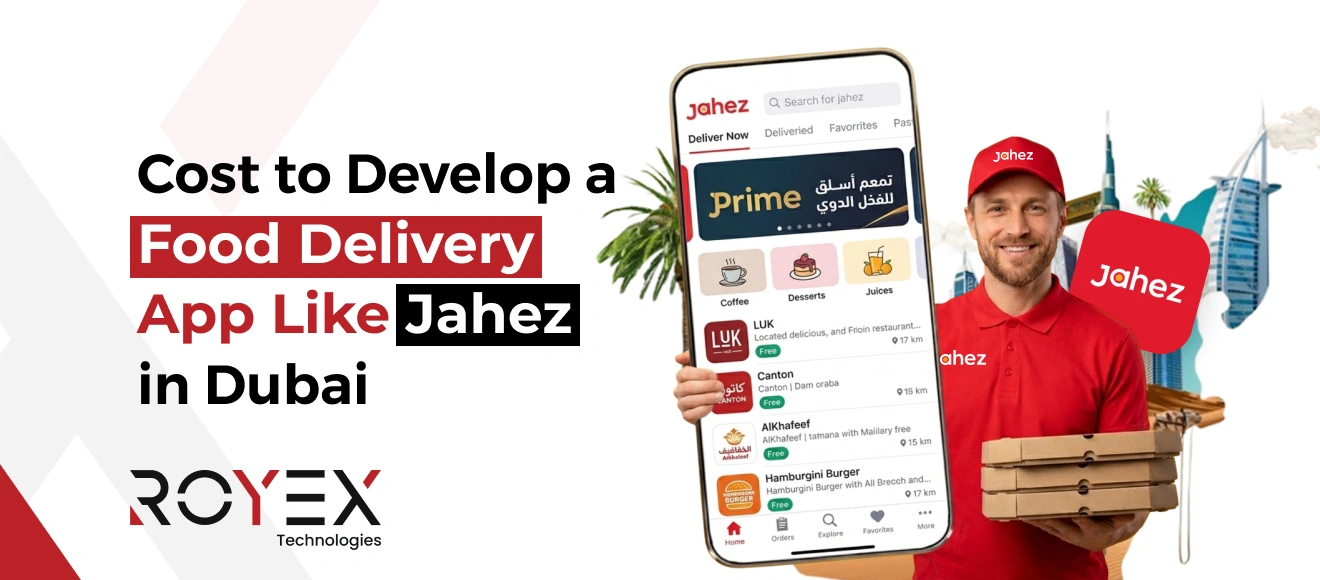
Cost to Develop a Food Delivery App Like Jahez in Dubai
Food delivery apps have transformed the restaurant industry by connecting customers, restaurants, and delivery partners through a seamless digital ecosystem. Platforms like Jahez have become highly successful by offering convenient food ordering, real-time delivery tracking, multiple payment options, and extensive restaurant networks.
In Dubai and across the UAE, food delivery continues to experience massive growth due to busy lifestyles, high smartphone adoption, and increasing consumer preference for convenience. Customers now expect fast delivery times, personalized recommendations, and smooth ordering experiences directly from their mobile devices.
To capitalize on this growing demand, many restaurants, entrepreneurs, and food-tech startups partner with a mobile app development company in Dubai to build scalable food delivery platforms capable of handling thousands of daily orders and complex logistics operations.
This article explores the features, development process, technology stack, monetization opportunities, challenges, and estimated cost of developing a food delivery app like Jahez in Dubai.
Why Food Delivery Apps Are Growing in Dubai
Fast-Paced Urban Lifestyle
Dubai residents increasingly rely on food delivery services due to demanding work schedules and the convenience of ordering meals directly to their homes or offices.
High Smartphone Penetration
The widespread use of smartphones and mobile internet has made food delivery apps accessible to a large customer base.
Expanding Restaurant Industry
Dubai's diverse culinary landscape creates strong demand for delivery platforms that connect customers with local and international cuisines.
Growth of Cashless Payments
Digital payment adoption has simplified online ordering and accelerated the growth of app-based food delivery services.
Key Features of a Food Delivery App Like Jahez
Customer App Features
Restaurant Discovery
Users should be able to browse nearby restaurants, cuisines, ratings, promotions, and menu categories.
Advanced Search and Filters
The app should allow filtering by cuisine, delivery time, ratings, dietary preferences, and price range.
Online Ordering
Customers can add items to their cart, customize meals, and place orders seamlessly.
Real-Time Order Tracking
Live GPS tracking enables customers to monitor order preparation and delivery progress.
Restaurant Panel Features
Menu Management
Restaurants can update menus, pricing, item availability, and promotional offers in real time.
Order Management
Restaurant staff can receive, process, and manage incoming orders efficiently.
Analytics Dashboard
Restaurants can track sales, customer behavior, and operational performance metrics.
Delivery Partner Features
Delivery Assignment
Orders are automatically assigned to available delivery personnel based on proximity and workload.
Route Optimization
GPS-powered routing helps delivery partners complete deliveries efficiently.
Earnings Management
Drivers can view completed deliveries, earnings, incentives, and performance statistics.
Advanced Features for Modern Food Delivery Platforms
AI-Powered Food Recommendations
Artificial intelligence can suggest restaurants and menu items based on user preferences, order history, and behavioral patterns.
Loyalty and Rewards Programs
Customers can earn points, cashback, discounts, and exclusive offers to encourage repeat purchases.
Subscription Programs
Premium memberships can offer free delivery, exclusive discounts, and priority customer support.
Smart Delivery Optimization
AI algorithms can optimize delivery routes, reduce delivery times, and improve operational efficiency.
Scheduled Orders
Users can place orders in advance for future delivery at a specified date and time.
Admin Panel Features
User and Restaurant Management
Administrators can manage customers, restaurant partners, delivery personnel, and support teams.
Order Monitoring
Real-time visibility into order statuses allows efficient management of delivery operations.
Commission Management
Admins can configure restaurant commissions, delivery fees, and promotional campaigns.
Reporting and Analytics
Comprehensive dashboards provide insights into sales performance, customer activity, and platform growth.
Technology Stack
Mobile Development
- Flutter
- React Native
- Swift
- Kotlin
Backend Development
- Node.js
- Django
- Laravel
Database
- PostgreSQL
- MongoDB
- Redis
Third-Party Integrations
- Payment gateways
- GPS tracking services
- SMS notifications
- Push notifications
- CRM integrations
Cloud Infrastructure
- AWS
- Google Cloud Platform
- Microsoft Azure
Development Process
Market Research and Planning
The project begins with defining business objectives, target customers, delivery operations, and restaurant onboarding strategies.
UI/UX Design
Designers create intuitive interfaces focused on simplifying restaurant discovery, ordering, and delivery tracking.
MVP Development
The initial version includes restaurant listings, menu management, online ordering, payments, and delivery tracking.
Full Product Development
Additional features such as AI recommendations, loyalty programs, subscription models, and advanced analytics are implemented.
Testing and Deployment
Extensive testing ensures reliability, scalability, and security before launch.
Cost to Develop a Food Delivery App Like Jahez in Dubai
Basic MVP
AED 120,000 – AED 250,000
Includes customer app, restaurant panel, delivery partner app, payments, and basic order management.
Mid-Level Platform
AED 250,000 – AED 600,000
Includes loyalty programs, advanced analytics, route optimization, and marketing tools.
Enterprise Food Delivery Platform
AED 600,000 – AED 1,800,000+
Includes AI-powered recommendations, subscription services, multi-city operations, and enterprise-grade logistics infrastructure.
Monetization Strategies
Restaurant Commission Fees
The primary revenue source for food delivery platforms is commission earned on each order processed through the platform. Depending on the business model, commissions can range from a percentage of the order value to fixed service charges.
Delivery Charges
Platforms can generate revenue through delivery fees based on distance, order value, delivery speed, and peak-demand periods.
Subscription Memberships
Premium memberships offering free delivery, exclusive discounts, priority customer support, and special promotions create recurring revenue streams while improving customer retention.
Sponsored Restaurant Listings
Restaurants can pay for featured placements, homepage visibility, sponsored search results, and promotional campaigns to increase their exposure.
Advertising Opportunities
Food brands, restaurants, and beverage companies often invest in targeted advertising campaigns within delivery apps to reach active customers.
Data and Analytics Services
Large restaurant chains may pay for advanced reporting, customer insights, demand forecasting, and operational analytics generated by the platform.
Challenges
Managing Delivery Logistics
Coordinating restaurants, customers, and delivery personnel in real time requires sophisticated logistics systems and operational efficiency.
Maintaining Delivery Speed
Customers expect fast and reliable deliveries. Delays can negatively impact customer satisfaction and retention.
Restaurant Partner Management
Ensuring consistent food quality, menu accuracy, and service standards across numerous restaurant partners can be challenging.
Customer Retention
The food delivery market is highly competitive, requiring continuous investment in loyalty programs, promotions, and user experience improvements.
Scalability
As order volume increases, the platform must maintain performance, reliability, and operational efficiency across multiple locations and markets.
Why Dubai Is Ideal for Food Delivery Platforms
Large Consumer Demand
Dubai's busy professionals, families, and tourists generate consistent demand for convenient food delivery services.
Diverse Restaurant Ecosystem
The city's extensive restaurant industry creates significant opportunities for food delivery platforms to offer a wide variety of cuisines.
Strong Digital Adoption
Consumers in Dubai are comfortable using mobile apps for ordering food, making digital-first delivery platforms highly attractive.
Advanced Logistics Infrastructure
Dubai's transportation networks and smart city initiatives support efficient delivery operations and route optimization.
High Consumer Spending Power
Residents are willing to pay for convenience, premium delivery services, and subscription-based food delivery benefits.
Why Businesses Choose Royex
Businesses prefer working with an app development company in Dubai because building a food delivery platform like Jahez requires expertise in real-time logistics systems, restaurant management infrastructure, payment integrations, and scalable cloud architecture.
Royex specializes in developing complete food delivery ecosystems that connect customers, restaurants, delivery partners, and administrators through a single integrated platform. This enables businesses to manage complex operations efficiently while delivering exceptional user experiences.
The company also builds advanced capabilities such as AI-powered recommendation engines, smart route optimization, loyalty programs, subscription management systems, and analytics dashboards. These features help businesses improve operational efficiency, increase customer retention, and maximize profitability.
Most importantly, Royex develops secure, scalable, and performance-driven solutions capable of supporting thousands of daily transactions while maintaining reliability and customer satisfaction.
Conclusion
Developing a Jahez-like food delivery app in Dubai presents a significant opportunity in one of the region's fastest-growing digital sectors. As consumers increasingly prioritize convenience and speed, businesses can capitalize on growing demand for food delivery services.
A successful food delivery platform requires strong logistics infrastructure, seamless user experiences, efficient restaurant management systems, and scalable technology architecture. With the right development partner, businesses can build powerful food-tech ecosystems that serve both consumers and restaurant partners effectively.
Dubai's thriving restaurant industry, high digital adoption, and strong consumer demand make it one of the most attractive markets for launching and scaling a food delivery platform.