










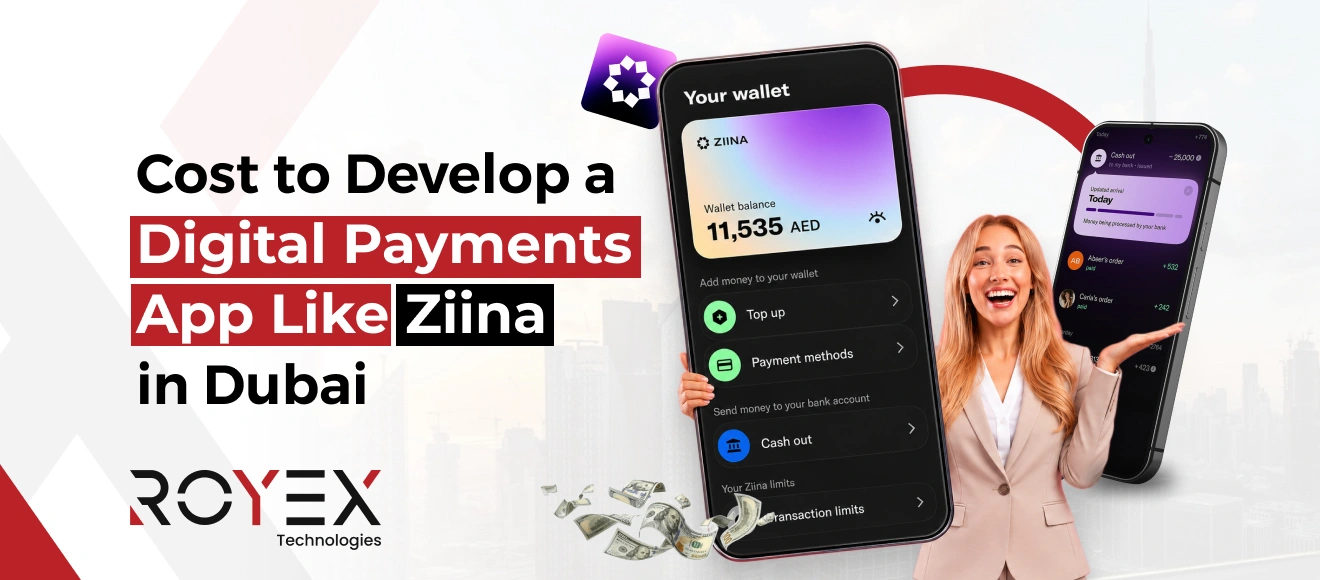
Cost to Develop a Digital Payments App Like Ziina in Dubai
Digital payment platforms are transforming the way individuals and businesses send, receive, and manage money. Apps like Ziina have simplified peer-to-peer payments by offering instant money transfers, payment requests, QR code transactions, and seamless financial interactions through a mobile-first experience.
In Dubai and across the UAE, cashless transactions are becoming the norm as consumers increasingly rely on digital wallets, mobile banking, and fintech applications for everyday financial activities. The government's push toward a digital economy and the growing adoption of fintech solutions have created significant opportunities for innovative payment platforms.
As a result, many startups, financial institutions, and entrepreneurs are partnering with a mobile app development company in Dubai to build secure, scalable, and regulation-compliant payment solutions that cater to modern consumer expectations.
This article explores the features, development process, technology stack, monetization opportunities, challenges, and estimated cost of developing a digital payments app like Ziina in Dubai.
Why Digital Payment Apps Are Growing in Dubai
Growing Cashless Economy
The UAE has become one of the leading cashless economies in the region. Consumers increasingly prefer digital payments due to their convenience, speed, and security.
Government Support for Fintech Innovation
Dubai actively promotes fintech innovation through various initiatives and regulatory frameworks that encourage digital financial services and startup growth.
High Smartphone and Banking Penetration
With widespread smartphone usage and strong banking infrastructure, digital payment platforms can easily reach large segments of the population.
Demand for Instant Transactions
Consumers and businesses expect real-time payments, making peer-to-peer transfer apps highly attractive in today's fast-paced economy.
Key Features of a Digital Payments App Like Ziina
User Registration and Verification
Secure Account Creation
Users should be able to create accounts quickly using mobile numbers, email addresses, and secure authentication processes.
KYC Verification
Identity verification helps ensure compliance with financial regulations and prevents fraudulent activities.
Peer-to-Peer Money Transfers
Instant Transfers
Users can send money instantly to friends, family members, and contacts directly through the app.
Payment Requests
The platform should allow users to request money from others and track payment statuses.
QR Code Payments
Contactless Transactions
Users can make payments by scanning QR codes, enabling fast and secure transactions at stores, events, and businesses.
Merchant Acceptance
Businesses can accept digital payments without requiring expensive payment terminals.
Transaction History
Financial Tracking
Users should have access to detailed transaction histories, payment records, and spending insights.
Advanced Features for Modern Payment Platforms
AI-Powered Fraud Detection
Artificial intelligence can analyze transaction behavior to identify suspicious activities and prevent fraudulent transactions in real time.
Smart Spending Insights
The platform can provide users with spending summaries, budgeting recommendations, and financial insights based on transaction patterns.
Digital Wallet Functionality
Users can store balances within the app for faster transactions and improved payment convenience.
Split Payments
The app can allow groups to split bills, expenses, and shared payments automatically.
Merchant Payment Gateway
Businesses can integrate payment acceptance tools directly into their websites, mobile apps, and POS systems.
Admin Panel Features
User and Account Management
Administrators can manage user accounts, KYC approvals, and account verification processes.
Transaction Monitoring
Real-time monitoring allows administrators to track transactions, identify anomalies, and ensure regulatory compliance.
Fraud Prevention Dashboard
Admins can investigate flagged transactions and manage risk assessment workflows.
Reporting and Analytics
The platform should provide insights into transaction volume, active users, revenue performance, and customer behavior.
Technology Stack
Mobile Development
- Flutter
- React Native
- Swift
- Kotlin
Backend Development
- Node.js
- Django
- Java Spring Boot
Database
- PostgreSQL
- MongoDB
- Redis
Security Infrastructure
- End-to-end encryption
- Multi-factor authentication
- Biometric authentication
- PCI-DSS compliance systems
Cloud Infrastructure
- AWS
- Google Cloud Platform
- Microsoft Azure
Development Process
Discovery and Compliance Planning
The project begins with defining regulatory requirements, payment workflows, security protocols, and business objectives.
UI/UX Design
Designers create intuitive interfaces that simplify payments while maintaining trust and security.
MVP Development
The first version typically includes registration, KYC verification, peer-to-peer transfers, and transaction history.
Advanced Platform Development
Additional features such as QR payments, digital wallets, merchant tools, and AI fraud detection are added during later stages.
Security Testing and Deployment
Comprehensive testing ensures the platform meets financial security standards and regulatory requirements before launch.
Cost to Develop a Digital Payments App Like Ziina in Dubai
Basic MVP
AED 150,000 – AED 300,000
Includes user registration, KYC verification, peer-to-peer transfers, payment requests, and transaction history.
Mid-Level Platform
AED 300,000 – AED 700,000
Includes QR payments, digital wallets, merchant integrations, analytics, and enhanced security systems.
Enterprise Fintech Platform
AED 700,000 – AED 2,000,000+
Includes AI fraud detection, advanced compliance systems, banking integrations, multi-currency support, and enterprise-grade infrastructure.
Monetization Strategies
Transaction Fees
One of the most common revenue models is charging a small fee on certain types of transactions, particularly business payments, instant transfers, or cross-border transactions.
Merchant Service Fees
Businesses accepting payments through the platform may pay transaction processing fees or monthly subscription charges for merchant services.
Premium Features
Users can subscribe to premium plans that offer advanced financial insights, higher transaction limits, faster transfers, and exclusive financial tools.
Business Payment Solutions
The platform can generate revenue by offering invoicing, payroll management, and payment collection services to businesses.
Financial Partnerships
Partnerships with banks, lenders, insurance providers, and fintech companies can create additional revenue opportunities through referral programs and integrated financial products.
Value-Added Services
Additional services such as budgeting tools, expense management, investment products, and financial education content can further increase monetization potential.
Challenges
Regulatory Compliance
Fintech applications must comply with strict financial regulations, KYC requirements, anti-money laundering policies, and data protection laws.
Security Risks
Payment platforms are attractive targets for cybercriminals, making advanced security infrastructure essential for protecting user funds and data.
Fraud Prevention
Detecting and preventing fraudulent transactions requires continuous monitoring, AI-powered risk assessment, and strong verification processes.
Building User Trust
Consumers are highly sensitive when it comes to financial applications. The platform must demonstrate reliability, transparency, and security to gain widespread adoption.
Scalability
As transaction volumes increase, the infrastructure must support high availability, low latency, and real-time processing without performance issues.
Why Dubai Is Ideal for Fintech Payment Platforms
Strong Fintech Ecosystem
Dubai has emerged as one of the leading fintech hubs in the Middle East, attracting startups, investors, and financial institutions from around the world.
Government Support
The UAE government actively promotes financial innovation through supportive regulations, fintech accelerators, and digital transformation initiatives.
High Digital Adoption
Consumers in Dubai are highly receptive to digital financial services and increasingly prefer mobile-first payment solutions.
International Business Environment
Dubai's global business ecosystem creates strong demand for digital payment solutions that support both consumers and enterprises.
Growing Cashless Economy
The region's shift toward cashless transactions creates long-term growth opportunities for payment platforms and fintech businesses.
Why Businesses Choose Royex
Businesses prefer working with an app development company in Dubai because developing a payment platform like Ziina requires expertise in financial technology, banking integrations, regulatory compliance, and enterprise-grade security systems.
Royex specializes in building secure fintech ecosystems that combine digital payments, wallet systems, peer-to-peer transfers, merchant services, and real-time transaction processing into one scalable platform. This enables businesses to launch modern financial products while maintaining high levels of reliability and security.
The company also develops advanced capabilities such as AI-powered fraud detection, biometric authentication, financial analytics, QR payment systems, and multi-currency transaction support. These features help fintech companies deliver exceptional user experiences while minimizing operational risks.
Most importantly, Royex follows industry best practices for security, compliance, and scalability, ensuring fintech platforms can grow confidently while meeting the evolving demands of users and regulators.
Conclusion
Developing a Ziina-like digital payments app in Dubai presents a significant opportunity in the rapidly expanding fintech sector. As consumers and businesses continue embracing cashless transactions, demand for secure, convenient, and innovative payment solutions will continue to grow.
A successful payment platform requires robust security architecture, seamless user experiences, regulatory compliance, and scalable infrastructure. With the right technology partner, businesses can build powerful fintech ecosystems capable of serving millions of users.
Dubai's strong fintech ecosystem, government support, and growing digital economy make it one of the most attractive markets for launching and scaling a digital payments platform.