










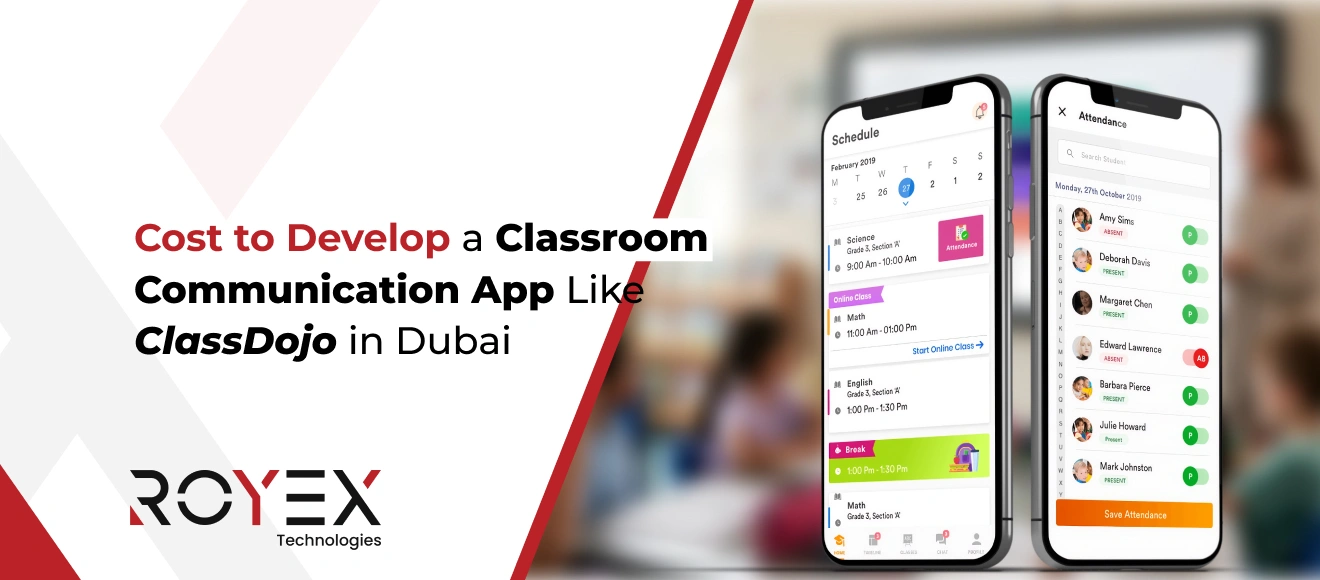
Cost to Develop a Classroom Communication App Like ClassDojo in Dubai
Classroom communication platforms have transformed how schools, teachers, students, and parents interact by creating a connected digital learning environment. Apps like ClassDojo have become highly popular because they simplify classroom management, parent communication, student engagement, and behavioral tracking through a user-friendly and interactive platform.
In Dubai and across the UAE, schools are rapidly adopting digital learning solutions as part of broader smart education initiatives. Parents increasingly expect real-time communication with teachers, while educational institutions seek tools that improve transparency, student engagement, and classroom organization.
This growing demand is encouraging educational businesses and institutions to work with a mobile app development company in Dubai to build scalable classroom communication and student engagement platforms tailored for modern schools and learning environments.
This article explores the features, architecture, development process, monetization strategies, challenges, and cost of building a ClassDojo-like app in Dubai.
Why Classroom Communication Apps Are Growing in Dubai
Increasing Adoption of Smart Education
Dubai has heavily invested in smart education initiatives, encouraging schools to adopt digital tools that improve collaboration, engagement, and classroom management.
Demand for Better Parent-Teacher Communication
Parents now expect instant updates about attendance, assignments, classroom activities, and student behavior. Digital communication platforms help schools maintain transparency and strengthen parent involvement.
Hybrid and Digital Learning Expansion
The growth of hybrid learning models has increased the need for centralized platforms that support communication, assignments, classroom updates, and engagement outside physical classrooms.
Key Features of a Classroom Communication App Like ClassDojo
Teacher, Parent, and Student Profiles
The platform should support separate user roles for teachers, students, parents, and school administrators with role-based access and permissions.
Classroom Communication System
Teachers can send announcements, updates, assignments, and private messages directly to parents and students in real time.
Student Behavior and Performance Tracking
The app should allow teachers to track attendance, classroom behavior, participation, and academic performance through customizable metrics.
Media Sharing and Classroom Stories
Teachers can share classroom photos, videos, and activity updates to keep parents engaged in student learning experiences.
Advanced Features for Modern Classroom Platforms
AI-Powered Student Insights
Artificial intelligence can analyze student participation, behavior, and academic performance to identify learning patterns and support personalized education strategies.
Gamification and Reward Systems
Points, badges, achievement levels, and reward systems help motivate students and improve classroom engagement.
Homework and Assignment Management
Teachers can assign homework digitally, collect submissions, and provide feedback directly within the platform.
Multi-Language Support
Dubai’s multicultural school environment requires multilingual support to ensure accessibility for diverse student and parent communities.
Admin Panel Features
School and Classroom Management
Admins can create schools, classrooms, academic structures, and manage user permissions across the platform.
Teacher and Student Monitoring
The system allows administrators to monitor communication activity, classroom engagement, and academic performance metrics.
Content Moderation and Security
Admins can manage uploaded media, communication logs, and platform security policies to ensure safe interactions.
Analytics Dashboard
Provides insights into classroom engagement, parent participation, attendance patterns, and platform usage statistics.
Technology Stack
Frontend
- Flutter for mobile applications
- React for web portals
- Native Swift and Kotlin for optimized device performance
Backend
- Node.js
- Django
- Go for scalable messaging infrastructure
Real-Time Communication Systems
- WebSockets for instant messaging
- Firebase for push notifications
- Cloud media storage systems
Cloud Infrastructure
- AWS
- Google Cloud Platform
- Azure
Development Process
Discovery Phase
Defines educational workflows, communication structures, user roles, and compliance requirements for schools and institutions.
UI/UX Design
Focuses on simplicity, accessibility, and engagement-driven interfaces suitable for teachers, parents, and young students.
MVP Development
Includes classroom communication, announcements, basic behavior tracking, and media sharing.
Full Product Development
Adds AI analytics, gamification, assignment management, and advanced school administration tools.
Cost to Develop a Classroom Communication App Like ClassDojo in Dubai
Basic MVP
AED 90,000 – AED 180,000
Includes messaging, announcements, classroom profiles, and basic behavior tracking.
Mid-Level Platform
AED 180,000 – AED 400,000
Includes assignment management, gamification, analytics, and multimedia sharing.
Enterprise Education Platform
AED 400,000 – AED 1,200,000+
Includes AI-powered insights, advanced school administration systems, multilingual support, and scalable communication infrastructure.
Monetization Strategies
Classroom communication platforms typically generate revenue through subscription-based models where schools pay monthly or yearly licensing fees based on the number of students, teachers, or classrooms using the system.
Another strong monetization strategy is offering premium features such as advanced analytics, AI-driven student insights, assignment automation, and enhanced parent engagement tools under higher-tier plans.
Educational institutions may also pay for custom integrations with existing school management systems, attendance systems, and LMS platforms. Additionally, enterprise licensing opportunities exist for school groups and educational organizations managing multiple campuses.
Over time, the platform can also monetize through premium educational content, virtual classroom add-ons, and integrated learning modules designed for teachers and students.
Challenges
One of the biggest challenges in building a classroom communication platform is ensuring child safety and secure communication. Since the app involves interactions between teachers, students, and parents, strong moderation systems and privacy controls are essential.
Another challenge is maintaining high engagement among parents and teachers. If communication becomes overwhelming or inconsistent, user adoption and retention can decline.
Scalability is also important, especially for schools with thousands of users communicating simultaneously through messaging, media sharing, and notifications.
Additionally, designing interfaces that are simple enough for young students while still functional for educators and administrators requires careful UX planning.
Why Dubai Is Ideal for Classroom Communication Platforms
Dubai is an ideal market for classroom communication platforms due to its strong investment in smart education, high digital adoption, and multicultural school ecosystem. Educational institutions across the UAE are actively integrating technology into learning environments to improve communication and operational efficiency.
Parents in Dubai are also highly involved in student education and increasingly expect real-time visibility into classroom activities, attendance, and academic performance. This creates strong demand for parent-teacher engagement platforms.
Additionally, Dubai’s advanced internet infrastructure and high smartphone penetration make mobile-first educational communication platforms highly accessible across schools and families.
Why Businesses Choose Royex
Businesses prefer working with a app development company in Dubai because building a classroom communication platform like ClassDojo requires expertise in real-time messaging systems, scalable cloud infrastructure, secure educational data handling, and engagement-driven UX design.
Royex specializes in building modern EdTech ecosystems that combine classroom management, communication tools, assignment systems, and student engagement features into a unified platform. This allows educational institutions to create seamless digital learning environments for teachers, parents, and students.
Royex also integrates advanced capabilities such as AI-powered student insights, gamification systems, multilingual support, and enterprise-grade school management tools. These features help schools improve communication, transparency, and student engagement at scale.
Most importantly, Royex focuses on building user-friendly educational products that are secure, scalable, and optimized for long-term adoption across schools, educational groups, and digital learning ecosystems in Dubai and beyond.
Conclusion
Developing a ClassDojo-like classroom communication app in Dubai presents a strong opportunity in the rapidly growing EdTech sector. With increasing demand for smart education tools and stronger parent-teacher engagement, businesses can build powerful platforms that improve classroom communication and student experiences.
A successful platform requires secure infrastructure, real-time communication capabilities, intuitive design, and scalable educational systems. With the right development partner, businesses can create next-generation classroom ecosystems that redefine digital learning and school communication in the UAE and global markets.