









Latest Blog

Event Management in 2026: Why Intelligent Platforms Will Win
Artificial intelligence sounds exciting when people talk about it. Smarter apps, faster decisions, better customer experiences. But when you step inside a real business, trying to use AI, the excitement quickly meets reality. Models need connected data systems that work together and remain stable under pressure. This is where many AI ideas slow down or fail. When hardware limits are no longer a concern, teams can focus on creating smarter products and better decisions. In this blog, we will talk about why cloud infrastructure has become the steady backbone of AI-first businesses and why it is no longer optional if you want AI to work for you truly.

Why Startups Are Choosing AI Vibe Coding for MVP Development
AI Vibe Coding has become the preferred approach for MVP (Minimum Viable Product) development because it aligns perfectly with what startups actually need: speed, flexibility, lower cost, and continuous learning. Let’s explore why this shift is happening—and why it’s accelerating.

Fleet Management in 2026: From Tracking to Intelligence
If you had asked a fleet manager ten years ago what their biggest concern was, the answer would likely have been simple. Where are my vehicles at the moment, and are they being used correctly? Back then, tracking felt like the finish line. If you could see dots moving on a screen, you felt in control. This blog is a conversation about that shift. Not in technical language and not in future hype. Just a clear look at how fleet management is moving from simple tracking to real intelligence by 2026 and why that matters more than ever.
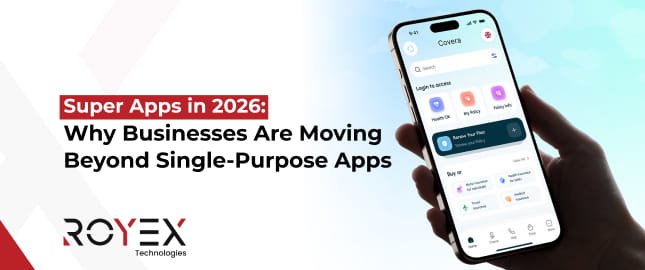
Super Apps in 2026: Why Businesses Are Moving Beyond Single-Purpose Apps
For more than a decade, mobile strategy followed a simple rule: one app, one purpose. A banking app for banking. A delivery app for delivery. A booking app for booking. By 2026, that rule is breaking down. Customers are overwhelmed by apps. Businesses are frustrated by fragmented user journeys. And AI has changed how digital experiences are designed and delivered. The result is a clear shift toward Super Apps—platform-style mobile apps that combine multiple services, workflows, and experiences into a single intelligent interface. This article explains why super apps are rising, what makes them possible now, and why businesses that don’t adapt will struggle.

Top Mobile App Development Trends to Watch in 2026
By 2026, mobile app development has moved far beyond building screens and features. Apps are now intelligent systems, business interfaces, and AI-powered decision layers that sit at the center of customer experience and operations. What’s changing is not just how apps are built—but why they are built.

Why Cloud Infrastructure Is the Backbone of AI-First Businesses
Let us talk honestly about how businesses are changing right now. Almost every serious company wants to use artificial intelligence in some way. Some want smarter customer support. Some want better sales forecasts. Others want systems that learn from data and improve decisions over time. This shift did not happen overnight. It is the result of growing data, faster networks, and a clear need to move quicker than competitors. In this article, we’ll break down why cloud infrastructure is crucial for AI-first businesses—and we’ll keep it simple and easy to follow. No heavy language. No technical fog. Just a clear conversation about what works and why.
Can You Build Apps Without Coding? Inside AI Vibe Coding
For years, building an app meant one thing: you needed to know how to code—or hire people who did. In 2026, that rule has fundamentally changed. Welcome to the world of AI Vibe Coding, where apps are created through intent, conversation, and direction—not manual programming.
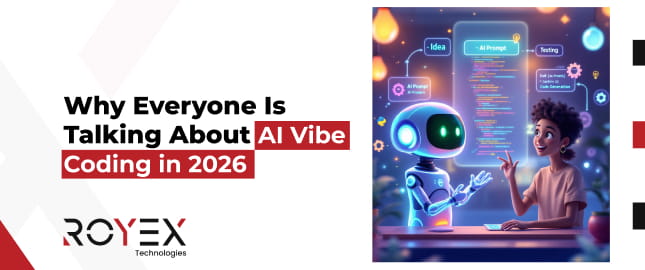
Why Everyone Is Talking About AI Vibe Coding in 2026
From startup founders to enterprise CTOs, everyone is talking about it. Not because it’s a buzzword—but because it’s changing how software is imagined, built, and shipped. So why exactly has AI Vibe Coding become the hottest topic in tech this year? Let’s break it down.
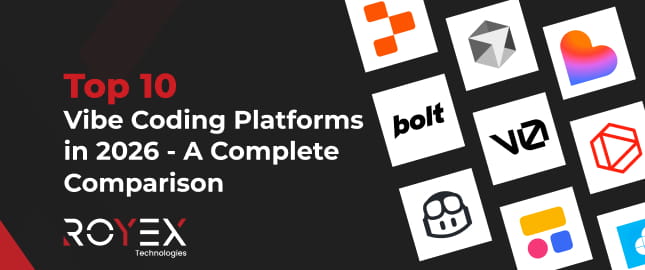
Top 10 Vibe Coding Platforms in 2026 — A Complete Comparison
The rise of AI Vibe Coding has shifted how software is built. Instead of traditional, manual programming, developers and non-developers alike now use natural language prompts, AI agents, and intelligent IDEs to generate, refine, and deploy applications faster and more intuitively than ever before. Below is a snapshot of the 10 most popular platforms driving this transformation — from beginner-friendly builders to powerful developer tools.

Building a Scalable Tech Startup in an AI-First World
By 2026, scalability is not about how big you can grow—it’s about how intelligently you can grow without proportionally increasing cost, complexity, or risk. Artificial Intelligence has fundamentally changed how startups are built, operated, and scaled. Today’s most successful startups are not scaling teams or infrastructure aggressively. They are scaling intelligence, automation, and decision-making. This article explains what it truly means to build a scalable tech startup in an AI-first world, what founders must do differently, and how to avoid the traps that cause most startups to break under growth.
Why Every Business Needs an AI Brain in 2026
In 2026, running a business feels very different from just a few years ago. Customers move faster. Markets shift without warning. Decisions that once took days now need to happen in minutes. While dealing with all this noise, most businesses still rely on tools that store information instead of helping them think. That gap is where problems start. This blog explores why an AI brain is becoming essential for businesses in 2026. We will talk about what it really means in simple terms. We will examine how it enhances daily work without introducing complexity. Most importantly, we will explain why businesses that adopt this approach now are better prepared for what comes next, while others risk falling behind without even realizing it.
Why AI-Powered CRM Will Replace Traditional Sales Tools
Sales has always been about people. Conversations. Timing. Understanding what someone actually needs, rather than what we want to sell them. For a long time, traditional sales tools tried to help with this, but they mostly acted like storage boxes. They stored names, emails, call notes, and deal stages. Useful, yes. Smart, not really.
How Mobile Apps Can Rank in AI Search Engines (GEO) in 2026
By 2026, search is no longer limited to blue links, keywords, and traditional SEO tactics. AI-powered search engines—such as conversational assistants, answer engines, and multi-modal AI platforms—now decide what to recommend, summarize, and surface to users. This shift has given rise to GEO (Generative Engine Optimization). GEO is not just about ranking websites. It is about making your business, data, and digital products understandable and trustworthy to AI systems. And in this new landscape, mobile apps play a critical role. Mobile apps are no longer invisible to search. In fact, they are becoming one of the strongest signals of authority, engagement, and real-world value for AI search engines.

How To Develop A Mobile Game Like Coin Master
For businesses, startups, and entrepreneurs looking to enter the mobile gaming space, developing a game like Coin Master presents a powerful opportunity. This comprehensive guide explains how to develop a mobile game like Coin Master, covering everything from concept design and technology choices to monetization strategies, live operations, and scaling.
Why AI Transformation Is a CEO Level Decision in 2026
In 2026, almost every business leader is talking about change. Some talk about speed. Some talk about growth. Some talk about survival. Yet beneath all these discussions, one idea continues to appear repeatedly. That idea is AI Transformation. This is no longer a side project for the IT team. It is not a tool you quietly test in one department. AI transformation increasingly shapes corporate thinking, decision-making, talent management, customer engagement, and strategic planning. That is why this decision cannot sit at the middle or lower levels of management anymore. It has become a CEO level responsibility.

What Is GEO? The New Rulebook for AI-Driven Search Visibility
For years, businesses fought for visibility using SEO—ranking web pages on Google through keywords, backlinks, and technical optimization. That playbook worked in a world where search engines showed lists of links and users did the research themselves. That world is gone. By 2026, people increasingly rely on AI-driven search engines—ChatGPT, AI assistants, answer engines, voice agents, and enterprise copilots—to tell them the answer directly. These systems don’t just rank pages. They reason, summarize, and recommend.

How To Develop A Mobile Game Like 8 Ball Pool
If you’re considering developing a mobile game like 8 Ball Pool, you’re essentially aiming to build a real-time multiplayer game that feels intuitive, competitive, and endlessly re-playable. This article walks you through every major step involved in developing such a game—from concept and mechanics to technology, monetization, and post-launch scaling—while keeping a business-focused perspective throughout.

How to Develop a Mobile Game Like Ludo King
For businesses, startups, and entrepreneurs exploring mobile game development, building a game like Ludo King is an attractive opportunity. However, the process involves much more than recreating a board and dice. It requires strategic planning, robust technical architecture, thoughtful UI/UX design, multiplayer networking, and continuous post-launch improvements. This in-depth guide explains how to develop a mobile game like Ludo King, covering every stage of the journey.

Online Business You Can Start Right Now in Dubai
With the ongoing lockdown , people manage their day-to-day activities from there. Many essential services have transitioned from brick-and-mortar stores to online businesses due to this lockdown. In this article, we will discuss the best online business opportunities in Dubai currently, and how you can get started on them.
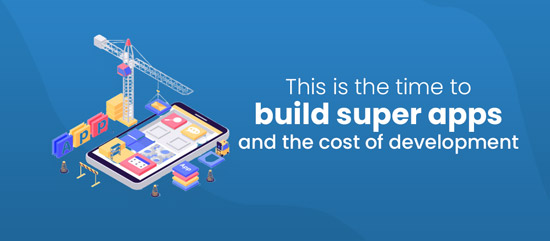
This Is The Time To Build Super Apps And The Cost Of Development
Super app became a trending Model of app development after applications like WeChat and Grab came out. Basically these apps were so quickly so popular that it became a go to application for any needs in Asian countries like China, Japan and Singapore. Here's the cost breakdown to build a super app.

Why is Online Grocery Delivery Service the Next Big Thing
The Coronavirus pandemic and the resulting global lockdown due to it has changed how we operate daily. All business has been shut down and is forced to run online. Consumers have cut down their spending to focus their budget on things that are the most essential. As a result, there has been a dramatic rise in demand for online shopping for essentials such as groceries. There have been reports worldwide of retailers struggling to keep up with the demands for online grocery shopping.
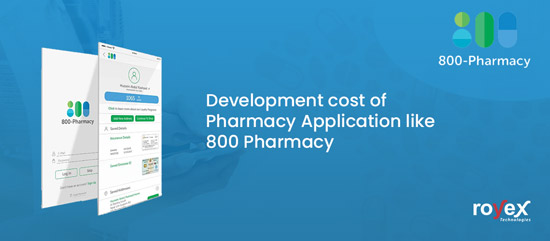
Development cost of Pharmacy App like 800 Pharmacy
The healthcare industry has grown massively and one of the reasons being is technological advancement. In this article, we discuss the development cost of a pharmacy app like 800 Pharmacy in Dubai.
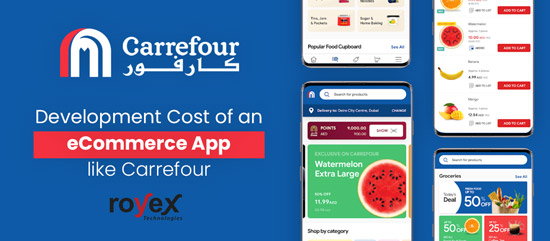
Development cost of an eCommerce platform like Carrefour?
Carrefouruae.com focuses on day to day needs, groceries, etc, What is the development cost of an ecommerce platform like Carrefour in Dubai? Find in this article.
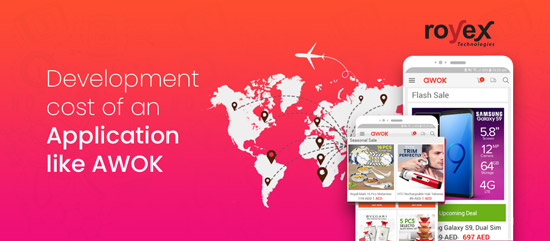
Development cost of an e-commerce website and Mobile App like AWOK
Awok is an ecommerce website and application which operates in the United Arab Emirates and Saudi Arabia. What is the development cost of an ecommerce website and mobile app like AWOK in Dubai?
Building Enterprise Mobile Application Using AWS
Enterprise Mobile App relates to a smartphone app used in the corporate world to address an enterprise's issues. Typically speaking, an enterprise application is a very broad and sophisticated technology platform. Mobile enterprise apps are developed to integrate or communicate with other mobile enterprise applications that the organization uses.

Flutter Mobile Application Development
We live in a world where internet rules every corner of our lives. Many of us skim throughout the day,or switch between multiple devices phones, smart watches, tablets, etc. Flutter on this emerging world where it focuses to move away from any individual devices and let you to use your services in any devices wherever you need them.
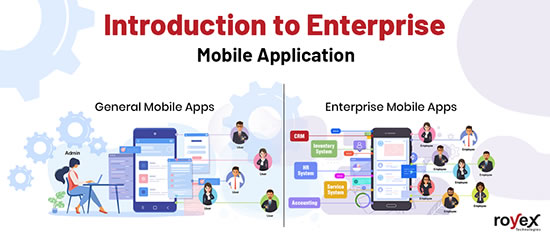
Introduction to Enterprise Mobile Application
Enterprises are usually regarded to be large companies that have many many employees. These organizations usually have massive budgets which allow them to be fairly flexible with their expenditure on technology. Enterprises have multiple departments where they work together to accomplish a common goal.

Mobile App Development Mistakes That Can Fail Your App
To eventually become the reasons of app failure, a lot of things go wrong. App development companies or developers get wrong; there are few things that when designing apps must consider. To come up with an error less and perfect app, such practices must be avoided.

Progressive Web Apps (PWA) is the Future and We are the Pioneer in Dubai
Progressive Web Apps are the trendiest ones and seem to be the evolution in the field of mobile applications. Royex Technologies is adopted this technology to develop various apps and become one of the Pioneer in Dubai
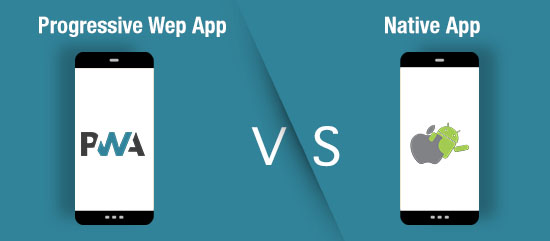
What are Progressive Web Apps? And How are they different from Native Apps?
The Complex and Critical question arises when you have any application idea in mind - Which Development platform should I use? PWA or Native application?

How does Business Gets Benefit from Mobile Apps
Almost every company has started knowing the impact of growing mobile marketplace, with the growing use of mobile devices and applications. Enhancing customer interaction and improving the efficiency of workers are undoubtedly some significant opportunities to improve sales.
AWS Summit Bahrain 2019 - Bringing Technologists Together
Technological innovations has become a major driver of disruptions across the world. Here, in the GCC it’s a pillar of the major economic transformation that is creating exciting new opportunities across the region.

How much does it cost to develop an on-demand service application like UrbanClap?
In this article, we will talk about the development cost of an on-demand service application like UrbanClap in Dubai.
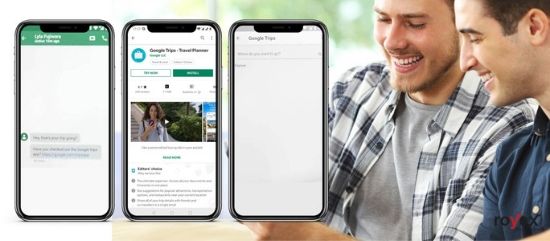
What are android Instant Apps and How does it work?
No one has got the time to wait and download a whole application so here comes Google Instant App. A Google Android instant app is a module program that enables end-users to test out a portion of a native Android app without installing it on a device.
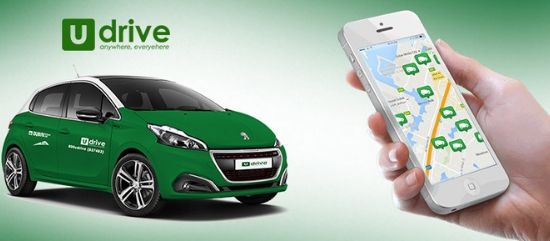
Development Cost and Working of Udrive - The Smart Car rental Application
Rent a car whenever, wherever with Udrive. Read our take on it and contact us to if you have an idea in mind. Find the development cost of a car rental application like Udrive in Dubai.

How much does it cost to develop an app like Fetchr?
The Million dollar investment startup - Fetchr, Delivery Application. Why is it so special and how does it work? What is the development cost of an app like Fetchr? Read to know our take on the trending application!

Five Great Ways to Grow your Travel business in Dubai, UAE (2025 Edition)
There are chances that you may be operating in a niche market as a small/medium sized travel brand. Focusing on a particular type of escape like Villa breaks or activity holidays, sell specifically to the luxury market, or perhaps you specialize in wedding and honeymoon packages. It can mean that growing can prove challenging which is a brilliant idea

10 Ecommerce Mistakes that Can Cost you a lot : How to avoid all Cost (2025 Edition)
E-commerce might look very interesting and easy medium of making money but once you are in the well, you will realize how hard it is to sell the products over there. The basic thing is, you are not the only one with the site! The competition in the eCommerce world is really intense and as such you have to make sure that your site is impeccable in order to have any chance of gathering success.

Big Data Analytics can help e-commerce Firms during Diwali
Companies can give away huge discounts and deals to push sales. In addition they can use celebrities to advertisement their online store. Diwali can be some sort of America’s Black Friday or the Cyber Monday when huge discounts are offered in the United States. We will try to look into the ways and means Indian e-commerce companies can adopt some of the best global practices in big data analytics to make their customers celebrate Diwali with greater joy.

Leo Bavaria and Woops EMS joint hands for Partnership in Germany
Leo Bavaria GmbH and Woops EMS has signed an agreement to become the partner for providing service of Woops EMS in Germany, Switzerland and Austria.