









What Is the Development Cost of an App Like Sarwa
If you want to build a fintech app like Sarwa, you are not building a simple wallet or trading UI. You are creating a regulated investment platform that combines onboarding (KYC), funding, investing/trading, portfolio reporting, security, compliance, and operations in one ecosystem.
Sarwa: Invest, Trade & Save is a UAE-based financial app that positions itself as an all-in-one platform for investing, trading stocks/ETFs, and saving, with a local UAE user experience. This article explains how a Sarwa-like platform works, why it is different, what it takes to run this business in the UAE, the realistic development cost range (AED 150,000–300,000), monetization potential, scalability technology, marketing strategies, and how Royex can help build and guide the solution.
What is a Sarwa-like fintech platform?
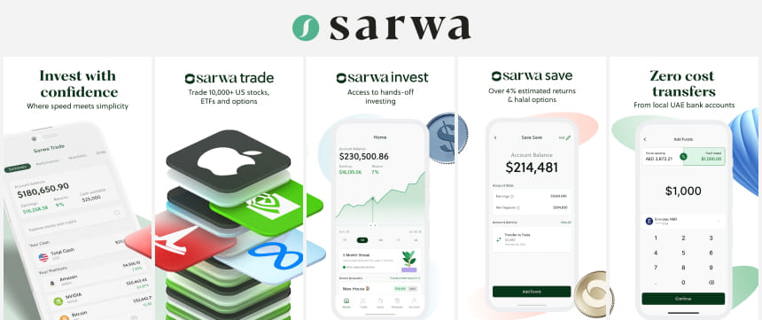
Sarwa is a digital wealth and investing platform in the UAE that offers multiple products inside one app:
-
Sarwa Invest: hands-off investing / managed portfolios
-
Sarwa Trade: self-directed trading for stocks and ETFs
-
Sarwa Save: cash management / savings-style product
Sarwa positions itself as an all-in-one app for invest, trade, and save, emphasizing real-time trading, hands-off investing, and savings returns. The platform is regulated by ADGM FSRA, showing the importance of compliance in this sector.
How does a Sarwa-like platform work?
A Sarwa-like app usually combines three fintech models in one platform:
-
Guided investing (robo/managed portfolios) – users answer risk-related questions, and the app recommends portfolios aligned with their goals.
-
Self-directed trading – users browse instruments, place orders, and manage positions directly.
-
Savings/cash management – idle funds are placed in low-risk savings accounts or partner products.
Key differentiators:
-
All-in-one investing, trading, and savings experience
-
Local UAE funding and onboarding support
-
Beginner-friendly UX combined with advanced trading tools
What are the main workflows of a fintech investment app?
-
User onboarding and KYC/AML
-
Signup, identity verification (passport/Emirates ID, selfie/liveness), risk profiling, AML checks
-
-
Account creation and approvals
-
Product eligibility, terms acceptance, disclosures
-
-
Funding and money movement
-
Bank transfers (local UAE support), card funding, internal sub-account transfers
-
-
Investing/trading engine
-
Portfolio recommendations, instrument browsing, order placement, tracking
-
-
Portfolio reporting and user experience
-
Holdings, performance charts, statements, tax documents
-
-
Compliance and risk monitoring
-
Suspicious activity alerts, transaction monitoring, trade surveillance
-
-
Admin and operations console
-
KYC review, support tickets, reconciliation, fee/revenue reporting, incident response
-
What is required to run a fintech platform in the UAE?
1. Regulatory and licensing requirements
-
Appropriate licensing or partnership model
-
KYC/AML, sanctions, and risk compliance policies
-
Legal documentation (terms, privacy, disclosures)
2. Banking and brokerage partnerships
-
Bank integrations for funding and withdrawals
-
Broker/dealer infrastructure
-
Custodian/clearing services and market data providers
3. Compliance operations team
-
KYC reviews, AML monitoring, support escalations, reconciliation, audits
4. Security and governance
-
Strong access controls, encryption, audit trails, business continuity, incident response
How much does it cost to build a Sarwa-like app?
The cost depends on complexity, integrations, security, and regulatory requirements rather than a simple number. Key factors include:
-
Compliance workflows (KYC, AML, reporting)
-
Financial and banking integrations
-
Security hardening and encryption
-
Portfolio/trading engine and user dashboards
-
Multi-product architecture (invest/trade/save)
Development effort typically includes:
-
Customer Mobile App (iOS + Android) – secure onboarding, KYC, dashboards, instrument browsing, funding, reporting
-
Backend Platform & APIs – authentication, portfolios, transactions, integrations, audit logs
-
Admin/Compliance Panel – KYC review, AML monitoring, transaction dashboards, reporting
-
Security, QA, DevOps – encryption, testing, CI/CD pipelines, monitoring, performance
-
Third-party integrations – KYC providers, banking APIs, market data, notifications
Total realistic development range: AED 150,000–300,000, depending on trading features, reporting depth, and compliance automation.
How does a Sarwa-like app earn revenue?
-
Managed investing/advisory fees – annual advisory fees, platform fees, or blended pricing
-
Trading revenue – spreads, premium features, margin tools, subscriptions
-
Savings product returns – yield spreads or partner arrangements
-
FX/conversion fees – when funding internationally
-
B2B/white-label partnerships – employer benefits or embedded investing platforms
Profit potential in UAE depends on Assets Under Management (AUM), active users, retention, CAC, and partner economics. Early-stage platforms may initially break even, while disciplined growth can achieve AED 300K–1.5M profit, scaling higher with strong AUM growth.
What technology stack is needed for scalability?
-
Mobile: Flutter or native iOS/Android
-
Backend: ASP.NET Core, Java/Spring, or Node.js
-
Database: PostgreSQL / MS SQL
-
Cache: Redis
-
Queues/Event Processing: Kafka / RabbitMQ / SQS
-
Search: Elasticsearch / OpenSearch
-
Cloud: AWS/Azure with strong IAM, autoscaling, private networking
-
Security: Secrets vault, WAF, DDoS protection, device risk signals
Architecture should separate identity, KYC, trading, portfolio, payments, and notifications for auditability and reliability.
How to differentiate in the UAE market?
-
Local-first onboarding (Arabic/English, UAE banks)
-
Education-first investing UX for beginners
-
Transparent fee design
-
Shariah-compliant or niche product options
-
Referral programs rewarding funded accounts
-
SEO/GEO content targeting queries like “how to invest in UAE” or “best investment app UAE”
How Royex Technologies can help
Royex is a Dubai-based tech company with deep experience building complex fintech apps. We provide:
-
Customer app (invest/trade/save UX)
-
Admin/compliance operations panel
-
Secure backend with audit-ready design
-
Integrations with KYC/AML providers, banking rails, and market data
-
Performance monitoring, DevOps, and security hardening
-
Analytics dashboards for product, compliance, and business KPIs
Royex ensures your platform is scalable, secure, and compliant while guiding technical and operational roadmaps. Royex combines development, operational insight, and scalability planning — helping startups move from MVP to sustainable growth. Established in 2013, Royex Technologies is a leading app development company in Dubai, that provides innovative solutions for small, medium, and large-scale companies.
Conclusion
Building a Sarwa-like fintech platform in the UAE is about trust, compliance, and retention. A realistic development cost is AED 150,000–300,000, depending on trading features and compliance automation. With a strong operational foundation, regulatory compliance, and market-focused differentiation, such a platform can become a highly profitable UAE fintech startup. Royex can help bring this vision to life, from architecture and development to launch and scale.