









What Is the Development Cost of a Ride-Hailing App Like Bolt
Building a ride-hailing app like Bolt means creating a real-time mobility marketplace: a passenger app, driver app, and admin/dispatcher system that matches riders with drivers, calculates fares, processes payments, ensures safety, and scales reliably during peak hours.
Bolt, originally Taxify, is an Estonian mobility company operating in 600+ cities across 50+ countries and positions itself as a mobility super-app. Bolt officially entered the UAE market in December 2024.
This article explains how such a platform works, business and operational requirements in the UAE, realistic development costs (AED 100K–150K), revenue models, tech stack for scalability, marketing strategies, and Royex’s end-to-end implementation approach.
What is Bolt?
Overview
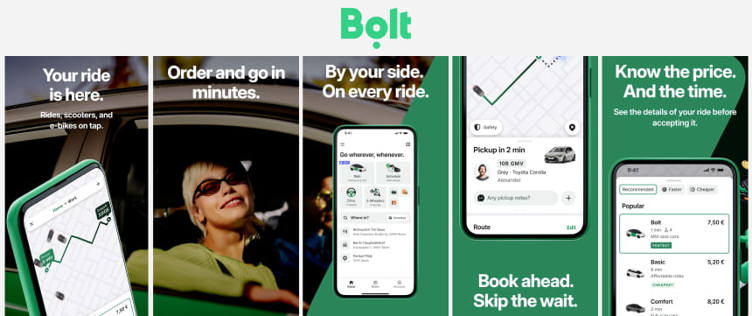
Bolt is a global ride-hailing platform where customers request rides, get matched with a nearby driver, track the trip in real time, and pay digitally.
Key user actions include:
-
Setting pickup and destination
-
Selecting ride types (economy, comfort, XL)
-
Tracking the driver live
-
Rating trips after completion
Bolt’s differentiator in many markets is pricing efficiency. Lower commissions and operational efficiency allow competitive pricing for riders while maintaining driver incentives.
How the Platform Works
Rider Requests a Trip
-
Select pickup location (GPS)
-
Enter destination
-
Choose ride category (economy, comfort, XL)
Pricing & ETA Calculation
-
Base fare + time + distance
-
Dynamic factors: traffic, demand peaks, special zones
-
Optional promotions and ride credits
Driver Matching & Dispatch
-
Nearest eligible driver receives request
-
Driver accepts → rider gets driver details + live tracking
Trip Execution with Live Tracking
-
Driver navigates to pickup
-
Trip starts → real-time route tracking
-
Trip ends → fare finalized
Payment & Settlement
-
Payment via card/wallet (or cash depending on market)
-
Platform commission deducted
-
Driver earnings recorded for payouts
Ratings, Support & Safety
-
Rider & driver ratings
-
Dispute/refund flows
-
Safety features, incident reporting, trip history
How Bolt Stays Competitive
-
Low platform commissions (15%–20%) → better driver earnings
-
Local fleet integrations to expand availability and reduce ETAs
-
Operational focus on matching efficiency, availability, and pricing transparency
Requirements to Run a Ride-Hailing Business in the UAE
Supply: Drivers & Fleet Partners
-
Driver onboarding and verification
-
Vehicle requirements and documentation
-
Fleet partnerships (taxis, limo, private fleets)
-
Driver incentives program (peak hours, zones, bonuses)
Operations & Support
-
24/7 customer support (delays, cancellations, disputes)
-
Driver support (accounts, payouts, deactivation appeals)
-
Incident management & safety escalation
-
Refund & chargeback handling
Compliance & Risk Management
-
Data privacy (location data security)
-
Payment security (PCI-compliant gateways)
-
Anti-fraud controls (fake rides, promo abuse, payment abuse)
Finance & Payouts
-
Weekly driver settlements
-
Commission and fee configuration
-
Detailed reports for drivers and finance teams
Growth Engine
-
Referral systems
-
Promotions management
-
Partnerships and corporate accounts
Development Cost in UAE: AED 100,000–150,000
Passenger App (iOS + Android): AED 30K–45K
-
Login/OTP, profile, saved places
-
Live map, pickup pin, destination search
-
Fare estimates & ride categories
-
Driver matching, tracking, trip details
-
Payment, receipts, trip history
-
Ratings, support, safety actions
Driver App: AED 20K–30K
-
Driver onboarding + document uploads
-
Go online/offline, accept/decline trips
-
Navigation + pickup/drop workflow
-
Earnings dashboard, trip history
-
Incentives, rating, support access
Admin Panel + Dispatcher Console (Web): AED 20K–30K
-
Real-time trip monitoring dashboard
-
Driver management (KYC, approvals, suspensions)
-
Pricing, surge, and promo rules
-
Refunds/disputes, support tooling
-
Reports: revenue, commission, payouts, cancellations
Backend Platform + Integrations: AED 30K–45K
-
Matching, ETA, and pricing engines
-
Payment gateway integration + payout automation
-
Push notifications + SMS/WhatsApp
-
Location services + route storage
-
Logs, audit trails, admin permissions
-
Cloud deployment, monitoring, alerts
Total Realistic Development Cost: AED 100K–150K
Costs increase with deeper safety features, admin automation, surge rules, corporate accounts, and advanced analytics.
How This Business Earns Profit
Commission per Trip (Core)
-
Platform commission on trip fare (commonly 15%–20%)
Service Fees
-
Optional platform fee per booking
Corporate Travel Accounts
-
Companies manage employee rides via dashboards (Bolt Business)
Partner Monetization
-
Fleet partnerships
-
Partner promotions
-
Future expansion: delivery/mobility bundles
Profit Potential in the UAE Market
Key factors:
-
Average fare & commission percentage
-
Driver incentives
-
Customer acquisition cost (CAC)
-
Ride frequency and retention
-
Operational costs
Year-End Profit Planning (Illustrative):
-
Conservative: break-even → AED 300K
-
Strong fleet partnerships + corporate accounts: AED 300K → 1.5M
-
Aggressive discounting / low retention: low or negative profit
The fastest path: fleet integration + corporate accounts + targeted incentives.
Technology Needed for Scalability
Recommended Stack:
-
Mobile: Flutter or native iOS/Android
-
Backend: ASP.NET Core / Node.js / Java
-
Database: PostgreSQL or MS SQL
-
Cache: Redis (driver availability, pricing, sessions)
-
Real-Time & Queues: Kafka/RabbitMQ/SQS
-
Maps: Google Maps Platform
-
Cloud: AWS/Azure with autoscaling + CDN
-
Observability: centralized logs, metrics, tracing, alerting
-
Security: RBAC, audit logs, encryption, fraud detection
Market Differentiation & Marketing Strategies
Differentiation Ideas
-
Pick a niche: corporate rides, airport runs, family rides, women-focused, or premium
-
Win on reliability: lower cancellations & better ETAs
-
Driver satisfaction: fair earnings + predictable incentives
Marketing Strategies
-
Fleet partnerships → instant supply & coverage
-
Corporate packages → HR/admin dashboards, monthly billing
-
Local SEO/GEO pages → “ride-hailing app Dubai”, “book taxi Dubai”
-
Referral loops → rider + driver referrals
-
Event partnerships → concerts, stadiums, exhibitions
Startup Profitability Considerations
With AED 100K–150K development cost, profitability in UAE depends on:
-
Early driver/fleet network acquisition
-
Targeted incentives (avoid endless discounts)
-
Retention strategies (subscriptions, corporate usage)
-
Strong operational management (support, safety, fraud control)
Directly competing on discounting against massive platforms is not sustainable.
How Royex Can Help
What Royex Delivers
-
Passenger app + driver app + admin/dispatcher panel
-
Matching, pricing, surge-ready architecture
-
UAE-ready integrations (payments, SMS, maps, fleet workflows)
-
Security, monitoring, operational reporting
-
Roadmap planning for corporate accounts, fleet portals, analytics
Why Royex
-
Dubai-based with experience in large-scale platforms
-
Combines product engineering + operational workflows
-
Builds reliable, scalable, and profitable ride-hailing systems
Royex combines development, operational insight, and scalability planning — helping startups move from MVP to sustainable growth. Established in 2013, Royex Technologies is a leading app development company in Dubai, that provides innovative solutions for small, medium, and large-scale companies.
Conclusion
A ride-hailing app like Bolt is a real-time marketplace that thrives on fast matching, efficient pricing, strong driver supply, and operational reliability.
To build a similar platform in the UAE, a realistic development cost is AED 100K–150K, covering passenger/driver apps, admin operations, backend systems, payments, maps, and scalability foundations. With the right niche positioning, fleet partnerships, and corporate accounts, it can be a profitable startup. Royex can deliver and guide the solution from architecture to launch and growth.