









What Is the Development Cost of a Quick Commerce App Like Instamart
If you want to build a quick-commerce app like Instamart, you are not just creating a grocery app—you are building a real-time commerce and operations platform.
A platform like Instamart combines:
-
Customer ordering app
-
Real-time product catalog and inventory
-
Dark store / micro-fulfillment workflows
-
Picker/packer operations
-
Rider dispatch and tracking
-
Payments, refunds, and support
-
Admin analytics and monitoring
This article explains what Instamart is, how it works, what makes it different, requirements to run a similar business, realistic development cost in AED 70,000–100,000, profit model, UAE market opportunity, scalable tech stack, marketing strategy, and how Royex can help build and guide the business.
What is Instamart?
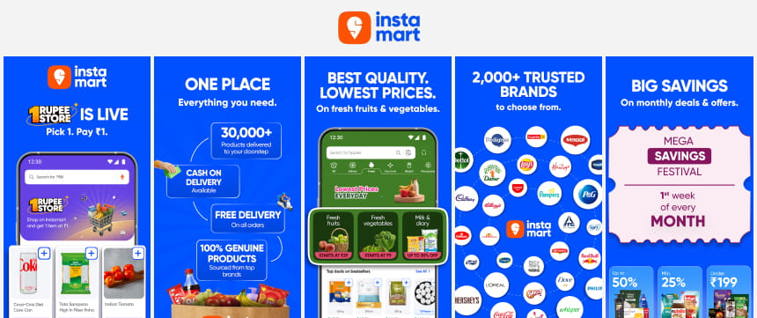
Instamart is the quick-commerce grocery and essentials app operated by Swiggy (India). It focuses on delivering groceries and daily-use products quickly to customers.
-
Google Play listing: 30,000+ products across groceries, kitchen essentials, electronics, beauty, baby care, pet products, and household items
-
Coverage: 120+ cities in India
-
App positioning: Speed, variety, and convenience
Instamart by the Numbers (Market Snapshot)
1) Users
-
10M+ downloads
-
1.32M reviews
-
4.7-star rating
Note: Downloads are indicative of adoption, not active users
2) Usage / Transactions
-
285.5 million orders in FY25
-
7.1M average monthly transacting users
3) Funding (Swiggy, Parent Company)
-
Total raised: ~$3.62B (pre-IPO & post-IPO rounds)
4) Employees
-
Swiggy workforce: 7,431 employees (FY25)
-
LinkedIn band: 10,001+ employees
5) Revenue
-
Swiggy revenue FY25: ₹15,227 crore (+35% YoY)
-
Instamart gross order value rose 88% in a quarter (Reuters report)
6) Profitability
-
Swiggy remains loss-making while investing in quick commerce
-
FY25 net loss: ₹3,117 crore (from ₹2,350 crore in FY24)
-
Lesson: Quick commerce growth is possible, but profitability requires strong unit economics and operations discipline
How the Platform Works (and Why Instamart is Different)
A quick-commerce platform like Instamart relies on five tightly connected systems:
1) Customer Ordering App
Typical user journey:
-
Sign up / login
-
Add delivery address
-
Browse/search products
-
Add to cart and checkout
-
Track order in real-time
-
Receive delivery quickly
2) Product Catalog, Pricing & Promotions Engine
-
Product catalog management
-
Variants and SKUs
-
Pricing engine
-
Offers and coupons
-
Stock visibility by store/zone
3) Dark Store / Fulfillment Operations
-
Inventory placed near high-demand zones
-
Picker/packer workflows for rapid fulfillment
-
Real-time stock sync
-
Supports quick delivery
4) Delivery Dispatch & Rider Operations
-
Rider assignment and route planning
-
Dispatch updates and ETA tracking
-
Delivery confirmation
-
Delay and exception handling
5) Admin, Support & Analytics
-
Order monitoring dashboard
-
Inventory oversight
-
Refunds/cancellations
-
Customer support tools
-
City/store and promo performance analytics
Why Instamart is Different from a Normal Grocery App
-
Quick-commerce focus: Minutes-level delivery, not same-day or next-day
-
Operations-heavy: Inventory accuracy, fulfillment speed, dispatch quality, and reliable ETAs matter more than flashy UI
-
High repeat usage: Groceries and essentials encourage daily/weekly repeat orders
-
Broad categories: Electronics, beauty, pet care, and home essentials increase basket size and repeat frequency
Requirements to Run a Quick-Commerce Business in UAE
1) Inventory / Supply Model
-
Own dark stores
-
Partner-store model
-
Hybrid model (recommended for startups)
2) Fulfillment Operations
-
Stock planning & replenishment
-
Picker/packer workflow
-
Dispatch management
-
Returns/refunds handling
-
Quality control (especially perishables)
3) Delivery Network
-
In-house or third-party riders
-
Zone-based coverage rules
-
Routing and ETA logic
-
Peak-hour planning
4) Legal & Commercial Setup
-
Business license
-
Supplier agreements
-
Payment gateway setup
-
Customer T&Cs, privacy, refund policy
5) Unit Economics Management
-
Delivery cost per order
-
Discounts and promotions
-
Wastage/shrinkage
-
Repeat orders
Instamart shows that rapid growth without operational discipline can lead to losses.
Development Cost (AED 70,000–100,000)
A startup-ready quick-commerce platform typically includes:
1) Customer App (iOS + Android) — AED 22K–32K
-
Signup/login, address management, browsing, product details
-
Cart, checkout, payment integration, order tracking
-
Reorder & support features
2) Backend Platform & Inventory/Order Engine — AED 20K–28K
-
Catalog APIs, inventory visibility
-
Order lifecycle management
-
Pricing, promo engine, notifications, payment hooks
-
Basic analytics
3) Admin Panel (Web) — AED 10K–16K
-
Product/category & inventory management
-
Order dashboard, coupon management, refunds/cancellations
-
Reports by store/zone
4) Delivery/Operations Workflow Features — AED 8K–14K
-
Rider assignment & dispatch
-
ETA updates, delivery workflow
-
Operations dashboard by zone/store
5) QA, Deployment, Monitoring, Security — AED 8K–12K
-
Functional and edge-case testing
-
App deployment support
-
Logging & monitoring setup
-
Security: auth, RBAC, audit logs
✅ Total realistic cost: AED 70,000–100,000
Profit Model & UAE Market Potential
Revenue streams:
-
Product margins (wholesale → retail)
-
Delivery / platform fees
-
Sponsored listings & brand promotions
-
Private-label SKUs
-
Membership / loyalty programs
UAE advantages:
-
High smartphone penetration
-
Dense urban zones (Dubai, Abu Dhabi, Sharjah)
-
Convenience-driven consumers
-
High repeat purchase demand
Profit depends on:
-
Average order value (AOV)
-
Gross margin %
-
Delivery & picking/packing costs
-
Wastage/shrinkage
-
Repeat order frequency
-
CAC and zone utilization
Startup profit estimates (year-end, UAE):
-
Conservative: break-even to AED 100K–300K
-
Efficient execution + repeat customers: AED 300K–1M+
-
Heavy discounts or weak operations: losses
Profitability comes from operations discipline, not just installs or revenue.
Scalable Tech Stack
-
Mobile: Flutter / React Native
-
Backend: ASP.NET Core / Node.js (event-driven preferred)
-
Database: PostgreSQL / MS SQL
-
Cache: Redis (hot SKUs, sessions, inventory)
-
Queue/Event System: RabbitMQ / Kafka / SQS
-
Search: Elasticsearch / OpenSearch
-
Cloud: AWS / Azure (autoscaling + CDN)
-
Maps/Geo APIs: Google Maps
-
Observability: Logs, metrics, tracing, alerts
-
Security: RBAC, audit logs, secret management
Architecture recommendation: Modular services for Catalog, Inventory, Orders, Payments, Dispatch, Promotions, and Analytics. Enables multi-city rollout, hybrid store models, and category expansion.
Differentiation Strategies for UAE Market
-
Niche-first launch: premium groceries, imported goods
-
Healthy/organic quick delivery
-
Baby/family essentials
-
Office pantry or late-night convenience delivery
-
Accurate stock & ETAs, fresh produce guarantee
-
Arabic + English UX, area-specific promotions, Ramadan/Eid bundles
Operational excellence is often more impactful than bigger ad budgets.
Marketing Strategy for Quick-Commerce (UAE)
-
SEO / GEO content strategy: Target keywords like quick commerce app UAE, instant grocery delivery Dubai, online grocery Abu Dhabi
-
City & area landing pages: Dubai Marina, JLT, Downtown Dubai, Abu Dhabi zones
-
Referral & repeat-order programs: Credits, reorder discounts, weekly baskets, loyalty/membership perks
-
Community & influencer marketing: Mom communities, expats, lifestyle creators, office admins
-
Paid ads with retention-first focus: Focus on repeat frequency, basket size, and loyalty loops
How Royex Can Help
Royex can build a complete Instamart-like quick-commerce operating system, including:
-
Customer app (iOS + Android)
-
Admin panel for catalog, inventory, orders, promotions, and support
-
Backend architecture for order, inventory, and dispatch workflows
-
Payment integration & notifications
-
Operations dashboards for active monitoring
-
Scalable cloud deployment
-
SEO/GEO landing pages for UAE acquisition
Why Royex is ideal:
-
Expertise in workflow-heavy apps (orders, inventory, dispatch)
-
ASP.NET backend & scalable API knowledge
-
UAE market understanding: bilingual UX, payment preferences
-
Support for both technology build + growth strategy
Conclusion
Quick-commerce apps like Instamart are exciting but operationally demanding startups.
-
Public app metrics and Swiggy’s reported growth show enormous scale opportunity
-
Public losses highlight the need for unit economics discipline and operational excellence
-
With AED 70,000–100,000 development, a UAE-focused platform can support ordering, inventory, admin, and dispatch workflows
-
Smart zone strategy, fulfillment excellence, and retention-focused marketing can turn the platform into a profitable startup
Royex can design, build, and guide your journey from launch to scalable operations.