









What Is the Development Cost of a Food Delivery App Like HungerStation in the UAE? (2026 Complete Guide)
What Is HungerStation?
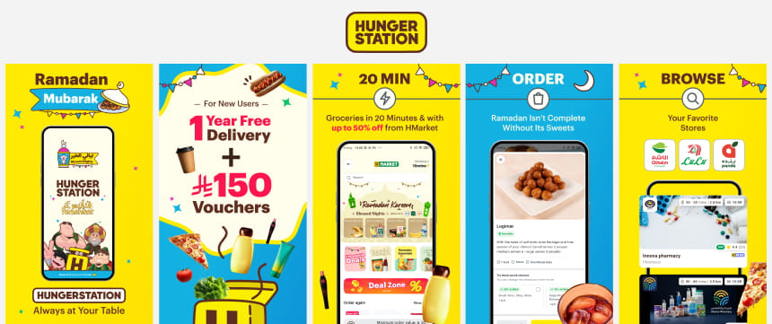
HungerStation is one of the most recognized online food delivery platforms in Saudi Arabia. It allows customers to order meals (and increasingly groceries) through a seamless mobile app that connects customers, restaurants, and delivery partners in one integrated flow.
-
Launched in 2012
-
Known for promotions and fast delivery
-
Fully acquired by Delivery Hero in 2023
When entrepreneurs say, “build an app like HungerStation,” they usually mean:
-
A multi-vendor food marketplace
-
Customer app + driver app + restaurant app/panel + admin panel
-
Payments integration
-
Promotions engine
-
Real-time tracking
-
Operational dashboards
How a HungerStation-Like Food Delivery Business Works
A successful food delivery marketplace is not one app — it’s a full ecosystem.
1. Customer Journey
-
Opens app → location detected
-
Browses restaurants and menus
-
Adds items to cart
-
Selects delivery time
-
Applies promo code
-
Pays (online or cash)
-
Tracks driver in real time
-
Receives order
-
Rates experience
2. Restaurant Journey
-
Receives order via tablet/app/panel
-
Confirms availability & prep time
-
Prepares food
-
Hands over to rider
-
Receives settlement (weekly/bi-weekly) minus commission
3. Delivery (Rider) Journey
-
Receives job request
-
Accepts and navigates to restaurant
-
Picks up order
-
Delivers to customer
-
Marks delivered
-
Earnings updated
4. Admin Operations (The Real Business)
-
Restaurant onboarding & contracts
-
Menu management
-
Rider onboarding & zone management
-
Dispute handling & refunds
-
SLA monitoring
-
Promotions & featured placements
-
Analytics & reporting
-
Fraud prevention
-
Cancellation policy management
What You Need to Run This Business in the UAE
A. Operational Requirements
-
Restaurant acquisition team
-
Account management
-
Customer support (WhatsApp/live chat)
-
Dispatch & rider performance monitoring
-
Quality control & refund handling
B. Delivery Model Choices (Big Impact on Cost & Profit)
Aggregator-Only (Restaurants Deliver)
-
Lower operational complexity
-
Less control over delivery experience
Hybrid Model
-
Some restaurants deliver
-
Some handled by your fleet
Full Logistics Model
-
You manage riders/fleet
-
Better control & consistency
-
Higher operational cost (insurance, dispatch, compliance)
C. Business & Legal Setup (High-Level)
-
Trade license
-
Contracts with restaurants & riders
-
Payment gateway onboarding
-
VAT handling
-
Data protection compliance
(Exact requirements depend on emirate and business structure.)
Food Delivery App Development Cost in UAE (AED 50,000–100,000)
To stay within AED 50K–100K, you must launch with a smart MVP (Minimum Viable Product).
Recommended MVP Scope
1. Customer App (iOS + Android)
-
OTP/email login
-
Location detection
-
Restaurant listing & search
-
Menu & cart
-
Order placement
-
Basic promo codes
-
Status-based tracking
-
Ratings & support link
2. Restaurant Panel
-
Accept/reject orders
-
Update prep time
-
Manage menu & availability
-
Order history
3. Driver App (If Managing Delivery)
-
Login
-
Accept job
-
Pickup & delivery status
-
Navigation integration
-
Earnings summary
4. Admin Panel
-
Restaurant onboarding
-
Order management
-
Refund flags
-
Basic promotions setup
-
Analytics dashboard
-
User management
Cost Breakdown Example
Option A (AED 50K–65K) – MVP Launch
-
UI/UX starter design
-
Cross-platform customer app
-
Basic restaurant panel
-
Admin panel
-
Backend APIs + database
-
Basic QA & deployment
Option B (AED 70K–100K) – MVP+
Everything above plus:
-
Driver app + zone-based dispatch
-
Real-time map tracking
-
Advanced offers (BOGO, bundles, free delivery rules)
-
Better analytics (funnels, retention, cohorts)
-
Automated settlement reports
-
Enhanced security hardening
Reality check: Enterprise-scale platforms like HungerStation are built over years. Start lean. Prove demand. Scale after revenue.
How Does This Business Earn Profit?
1. Restaurant Commission (Core Revenue)
Typically 15%–30% per order (depending on agreement and services).
2. Delivery Fees
-
Flat or distance-based
-
Peak-hour surge logic
3. Paid Restaurant Marketing
-
Featured placements
-
Search boosts
-
Banner ads
4. Subscription Plans (Optional)
-
Monthly visibility packages
-
Lower commission bundles
5. Additional Fees (Careful)
-
Service fees
-
Payment processing pass-through
Overcharging damages retention.
Profit Potential in the UAE Market
Dubai’s Department of Economy and Tourism cited Statista research projecting UAE online food delivery revenue exceeding AED 5B in 2025.
Profitability depends on:
-
Commission rate
-
Average order value (AOV)
-
Refund rate
-
Rider cost per order
-
Customer acquisition cost (CAC)
-
Repeat rate
Example Profit Model (Illustrative)
Assumptions:
-
AOV: AED 65
-
Commission: 20%
-
Orders/day: 300
-
Monthly orders: 9,000
Commission revenue/month:
9,000 × 65 × 20% = AED 117,000
Then subtract:
-
Support & ops: AED 25K–50K
-
Hosting: AED 3K–10K
-
Marketing: AED 30K–120K
-
Rider cost (if managing logistics)
With strong repeat rates and controlled marketing, profit becomes realistic.
Technology Needed for Scalability
Architecture
-
Modular backend
-
Clean API layer
-
Event logging
-
Fraud monitoring
Recommended Stack
Mobile: Flutter / React Native
Backend: ASP.NET Core / Node.js / Java
Database: PostgreSQL / MS SQL
Cache: Redis
Search: Elasticsearch / OpenSearch
Maps: Google Maps
Cloud: AWS / Azure
Monitoring: Centralized logging & alerts
Scalability Features
-
Queue-based order processing
-
Anti-fraud rate limiting
-
CDN for menu images
-
Database indexing optimization
How to Stand Out in a Crowded Market
Smart Differentiation Strategies
-
Niche focus (healthy, office lunch, premium desserts)
-
Hyper-local dominance
-
Strong restaurant support
-
High reliability (fewer cancellations)
-
Subscription free delivery model
-
Corporate catering channel
Marketing Strategies
1. Launch Strategy
-
Start with 30–80 restaurants
-
Focus on one tight zone
-
Limited-time zero delivery fee campaigns
-
Community partnerships
2. Restaurant Growth Marketing
-
Data dashboards for restaurants
-
Co-funded promotions
3. Customer Retention
-
Welcome offers
-
Personalized promotions
-
Loyalty programs
-
Win-back automation
4. GEO/SEO Strategy
-
“Food delivery in [area]” landing pages
-
Cuisine-based pages
-
Structured data + fast loading speed
Is It Profitable for a Startup?
If you launch within AED 50K–100K, your biggest risks are:
-
Customer acquisition cost
-
Discount wars
-
Logistics mismanagement
-
Restaurant churn
It becomes profitable when you achieve:
-
High repeat rate
-
Stable operations
-
Balanced commission structure
-
Controlled promotional spending
Focus on niche or zone dominance before competing with giants.
How Royex Can Help (development + real operational guidance)
1. Business & Product Strategy
-
Define MVP feature list
-
Map complete workflow
-
Plan unit economics
2. Build Within AED 50K–100K
-
Cross-platform customer app
-
Restaurant panel + admin dashboard
-
Driver app (if required)
-
Secure backend foundation
3. Scale After Launch
-
Advanced promotions engine
-
Real-time tracking optimization
-
Growth analytics dashboards
-
Cloud scalability upgrades
4. Growth Support
-
GEO-focused landing pages
-
App store optimization
-
Conversion improvement
-
Retention automation
Royex combines development, operational insight, and scalability planning — helping startups move from MVP to sustainable growth.Established in 2013, Royex Technologies is a leading app development company in Dubai, that provides innovative solutions for small, medium, and large-scale companies.