









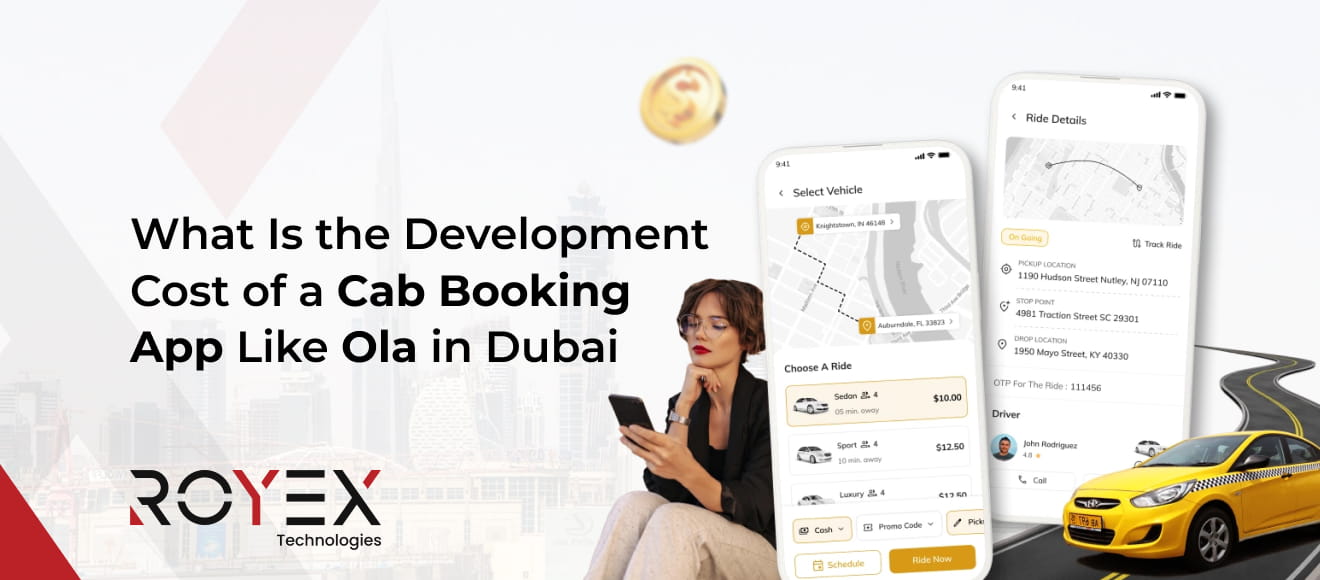
What Is the Development Cost of a Cab Booking App Like Ola in Dubai
If you are planning to build a cab booking app like Ola in Dubai, you are entering a high-demand but highly operational industry. This is not just a mobile app project—it is a mobility platform business that connects riders, drivers, payments, logistics, and real-time systems.
A ride-hailing platform typically combines:
-
Customer booking app
-
Driver mobile app
-
Dispatch and ride-matching engine
-
Live GPS tracking
-
Fare calculation and payment system
-
Safety and support features
-
Admin and operations dashboard
-
Regulatory and transport compliance workflows
This guide is written for startup founders and business owners researching the ride-hailing market. It explains how platforms like Ola operate, what it takes to run such a service in Dubai, development cost expectations, profit models, technology stack, and how Royex can help build the solution.
What is Ola?
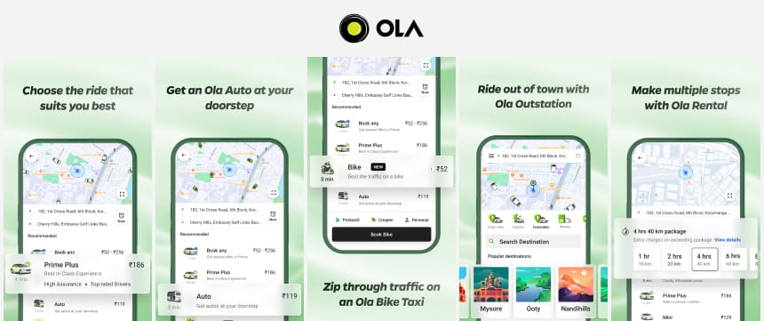
Ola Cabs is one of the largest ride-hailing and mobility platforms in India. The company operates a mobile-based transportation marketplace connecting passengers with drivers.
The platform offers multiple ride options including:
-
Standard cab rides
-
Auto-rickshaw rides
-
Bike taxis
-
Hourly rentals
-
Outstation travel
Ola’s mobile app listing highlights 40+ million trusted users across 200+ cities, positioning it as a large-scale mobility platform rather than just a taxi booking service.
Ride-hailing platforms like Ola compete in the on-demand transport space alongside companies such as Uber and regional mobility providers.
Ola by the Numbers (Public Snapshot)
Below is a simplified public overview of the platform’s scale.
User Base
-
40+ million users across 200+ cities (app listing claim)
Funding
-
Total funding raised: approximately $3.8 billion
Employees
-
Around 3,700+ employees globally
Revenue
-
Annual revenue reported around ₹2,200 crore in recent filings.
Profitability
Recent reports indicate the company has reached EBITDA profitability in some divisions, highlighting the importance of cost control and operational efficiency in ride-hailing businesses.
Key insight for founders: scale alone does not guarantee profitability. Operational efficiency and strong unit economics are critical.
How a Cab Booking Platform Works
A ride-hailing platform operates as a multi-sided marketplace connecting riders and drivers in real time.
Rider App (Customer Side)
Typical customer journey:
-
Sign up or log in
-
Select pickup and destination
-
View fare estimate and ride options
-
Confirm booking
-
Driver gets matched
-
Track driver live
-
Complete trip and pay
-
Rate driver or request support
Although this appears simple, it requires complex backend systems.
Driver App
Drivers use a dedicated mobile application to manage trips.
Key driver app features include:
-
Driver onboarding and document verification
-
Online/offline availability toggle
-
Trip request alerts
-
Navigation to pickup location
-
Rider verification via OTP
-
Trip completion process
-
Earnings dashboard and payouts
-
Incentives tracking
-
Support and issue reporting
Without a reliable driver application, the entire platform experience collapses.
Dispatch and Matching Engine
The dispatch engine is the core system of a ride-hailing platform.
It handles:
-
Matching riders with nearby drivers
-
Calculating estimated arrival time (ETA)
-
Managing cancellations or reassignments
-
Surge pricing during peak demand
-
Optimizing driver allocation across zones
This is where a simple taxi app becomes a complex real-time mobility platform.
Payments, Fares, and Financial Logic
Ride-hailing platforms require strong financial systems to handle:
-
Fare calculation
-
Promotions and coupons
-
Platform commission
-
Payment gateway integration
-
Driver payouts
-
Refunds and cancellations
-
Fraud detection
These financial workflows are critical for long-term sustainability.
Safety and Support Systems
Modern ride-hailing platforms must prioritize safety and trust.
Important features include:
-
Live trip tracking
-
Emergency SOS options
-
Masked calling and messaging
-
Trip audit logs
-
Rider and driver rating systems
-
Complaint management workflows
Strong trust and safety features are essential for customer adoption.
Requirements to Run a Ride-Hailing Business in Dubai
Launching a ride-booking platform in Dubai requires more than just technology.
Regulatory and Licensing Considerations
Dubai’s transportation ecosystem is regulated by the Roads and Transport Authority.
Ride-hailing businesses must consider:
-
Taxi aggregator partnerships
-
Limousine or chauffeur service licensing
-
Fleet partnerships
-
Corporate transport services
The exact regulatory route depends on your service model.
Driver Supply Strategy
A ride-hailing platform must maintain a stable driver network.
Common supply models include:
-
Fleet partnerships
-
Independent drivers
-
Company-owned vehicles
-
Hybrid models
Driver onboarding, training, and retention systems are critical.
Operations and Support Team
Unlike many digital startups, mobility platforms require live operational teams, including:
-
Dispatch monitoring
-
Customer support agents
-
Driver onboarding teams
-
Fraud and risk monitoring
-
Payment reconciliation
Operational quality directly affects user retention.
Unit Economics Planning
Successful ride-hailing businesses carefully track key metrics such as:
-
Average fare per trip
-
Trips per driver per day
-
Platform commission rate
-
Driver payout ratio
-
Customer acquisition cost
-
Repeat ride frequency
-
Cancellation rates
Ignoring these metrics often leads to losses despite high user growth.
Development Cost to Build a Cab Booking App (AED 100K–150K)
Building a startup-ready ride-hailing platform typically costs AED 100,000 to AED 150,000, depending on features and scalability requirements.
Rider App Development (AED 25K–35K)
Includes:
-
User registration
-
Location tracking and map integration
-
Ride booking flow
-
Fare estimation
-
Trip history
-
Ratings and reviews
-
Payment integration
-
Support features
Driver App Development (AED 22K–32K)
Includes:
-
Driver onboarding and document upload
-
Trip alerts and acceptance
-
Navigation assistance
-
Trip completion workflow
-
Earnings tracking
-
Payout information
-
Driver support tools
Backend and Dispatch System (AED 28K–40K)
The backend platform includes:
-
Driver-rider matching system
-
Trip lifecycle management
-
Fare and pricing engine
-
Cancellation handling
-
Payment integration
-
Notification services
-
Safety event logging
Admin and Operations Panel (AED 12K–20K)
Operations teams use a web dashboard to manage:
-
Driver approvals
-
Document verification
-
Live trip monitoring
-
Support tickets
-
Promotions and pricing rules
-
Reports and analytics
QA, Security, Deployment (AED 10K–18K)
This includes:
-
Functional testing
-
Ride-flow testing
-
Payment testing
-
Cloud deployment
-
Monitoring and alerts
-
Security hardening
Total estimated development cost: AED 100,000 – 150,000
Revenue Model for a Ride-Hailing Platform
Cab booking platforms generate revenue through multiple streams.
Ride Commission
The platform takes a percentage of each ride fare.
Booking Fees
Some platforms add a small service fee to each ride.
Dynamic Pricing
Higher fares during peak demand periods.
Driver Subscription Models
Drivers pay a weekly or monthly platform fee instead of commission.
Corporate Mobility Services
B2B transport services for:
-
corporate employees
-
airport transfers
-
hotel partnerships
-
event transportation
Profit Potential in the UAE Market
The UAE offers strong demand for mobility platforms due to:
-
High smartphone usage
-
Tourism-driven transportation demand
-
Dense urban areas
-
Premium transport expectations
Profitability depends heavily on operational metrics.
Typical startup outcomes may include:
-
Break-even to AED 200K–500K profit in early stages
-
AED 500K–2M+ with strong operations and corporate partnerships
-
Potential losses if driver incentives and customer acquisition costs are not controlled
The key is balancing supply, demand, and operational efficiency.
Technology Stack for a Scalable Ride-Hailing Platform
To support real-time ride matching and tracking, a scalable tech stack is essential.
Recommended stack:
Mobile Apps
Flutter or React Native
Backend
ASP.NET Core or Node.js
Real-Time Systems
WebSockets or SignalR
Database
PostgreSQL or MS SQL
Caching
Redis
Messaging Systems
RabbitMQ or Kafka
Maps and Routing
Google Maps or Mapbox APIs
Cloud Infrastructure
AWS or Microsoft Azure
Security
Token-based authentication, RBAC access control, and encrypted data storage.
Marketing Strategies for a Ride Booking App in Dubai
Successful ride-hailing startups usually combine technology with strong go-to-market strategies.
SEO and GEO Content Strategy
Target search queries like:
-
cab booking app Dubai
-
taxi booking app UAE
-
airport transfer app Dubai
-
chauffeur booking Dubai
Location-Based Landing Pages
Create landing pages for areas such as:
-
Dubai Marina
-
Downtown Dubai
-
Business Bay
-
Dubai Airport
Partnership Marketing
Collaborate with:
-
hotels
-
travel agencies
-
clinics and hospitals
-
event organizers
-
corporate offices
Referral Programs
Encourage growth through:
-
rider referral credits
-
driver referral bonuses
-
loyalty rewards
How Royex Can Help Build a Ride-Hailing Platform
Royex can develop a complete mobility platform tailored for the UAE market.
Royex solutions include:
-
Rider mobile app (iOS & Android)
-
Driver mobile app
-
Dispatch and matching backend system
-
Admin and operations panel
-
Payment gateway integrations
-
Real-time ride tracking systems
-
Support and safety workflows
-
Scalable cloud infrastructure
Royex also provides business workflow consulting, helping startups design operational processes that support long-term growth. Royex combines development, operational insight, and scalability planning — helping startups move from MVP to sustainable growth. Established in 2013, Royex Technologies is a leading app development company in Dubai, that provides innovative solutions for small, medium, and large-scale companies
Conclusion
Launching a cab booking app like Ola in Dubai is a significant but promising startup opportunity. Ride-hailing platforms combine technology, logistics, and operations into a single ecosystem.
While companies like Ola Cabs demonstrate the massive scale possible in mobility platforms, success depends on:
-
regulatory compliance
-
driver supply management
-
service quality
-
operational efficiency
-
strong unit economics
With a realistic development investment of AED 100,000–150,000, startups can build a robust ride-booking platform including rider apps, driver apps, dispatch systems, and scalable backend infrastructure.
With the right strategy and execution, a ride-hailing platform can grow into a profitable mobility business in the UAE—and Royex can help guide the journey from idea to launch and beyond.