









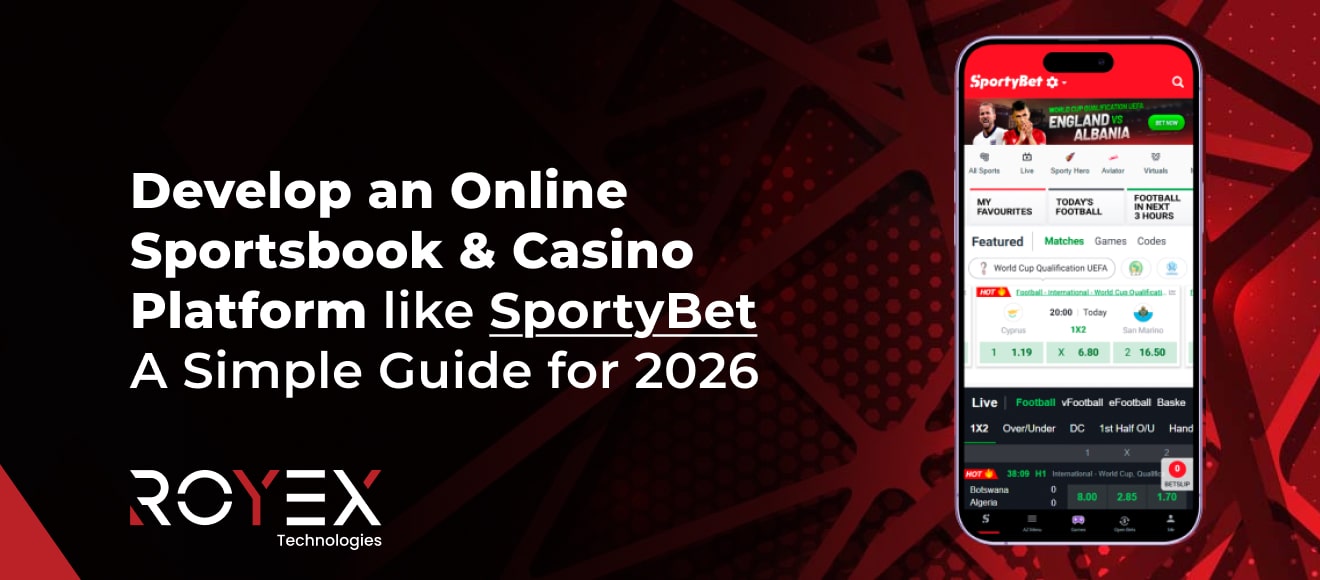
Develop an Online Sportsbook & Casino Platform like SportyBet — A Simple Guide for 2026
The online betting world is changing fast. More people are placing sports bets from their phones, exploring quick casino games, and looking for platforms that feel simple, secure, and fun. This steady rise has opened a strong opportunity for new entrepreneurs who want to build their own sportsbook and casino platform. Many look toward SportyBet as an example because it has earned a loyal user base through its clean layout, fast withdrawals, and smooth betting experience.
If you are planning to build something similar, the process can feel large at first. You may wonder where to start, what features matter most, and how to create a platform that can grow with your users. The goal of this guide is to break everything down in the simplest way possible. You will understand the core structure of a sportsbook platform, how casino games fit into the system, what it takes to run smooth payments, and how real time odds work behind the scenes.
By the time you finish reading, you will have a clear picture of the steps involved in building an online platform that follows the same spirit as SportyBet but still carries your own brand identity. You do not need deep technical knowledge to understand this guide. You only need the desire to enter a fast growing industry and the patience to learn how everything comes together.
The year 2026 will see even stronger demand for reliable betting platforms. Users expect faster performance, cleaner design, and more control over their experience. Starting now gives you the chance to build a platform that can meet these expectations with confidence. This guide will help you take the first step in the right direction.
SportyBet Clone App Basics for New Entrepreneurs
If you are new to the world of online betting, the idea of building a SportyBet clone app can feel complex at first. But once you understand the basics, you will see it is a well-structured business with clear building blocks. A SportyBet clone app is not a copy. It is a ready roadmap that follows the same features, layout, and user flow that made SportyBet popular. You get the foundation and then build something unique for your own target market.
What a SportyBet Clone App Really Means
A SportyBet clone app gives you a pre-built outline that includes sportsbook features, casino games, live betting, account management, and secure payments. This makes it easier for entrepreneurs to start fast without building every feature from scratch.
The clone app focuses on three core things.
One, a sportsbook system where users can place bets on football, cricket, tennis, basketball, esports, and more.
Two, fast withdrawals and deposits that make users trust the platform.
Three, a simple and clean interface that helps users place bets quickly even during live matches.
You can then add your brand style, your special features, and your market rules.
Why Entrepreneurs Choose Clone Solutions
Most new entrepreneurs do not want to spend years developing a betting platform. A clone solution shortens the timeline so you can focus on marketing, licensing, and user growth. It also reduces early-stage risks because the features are already tested and refined based on real user behaviour.
When you start with a clone app, you get:
- A stable backend
- A layout that users already understand
- A secure payment flow
- A ready admin panel
- Easy integration with odds providers
- Space to scale as your user base grows
Why Build a Platform Like SportyBet Now?
A Booming Market
Online sports betting and casino gaming is growing fast. Demand is rising globally. A well-built platform can reach many users across different regions. Starting now means you get in early — before the space gets crowded.
More Ways to Earn
A combined sportsbook and casino platform gives you multiple revenue streams. Sports bets, in-play betting, casino games, virtual games — when everything is in one place, earnings grow faster.
Go Live Sooner with Lower Risk
You have a choice: build from scratch or use a ready-made solution (a clone). A “clone” gives you the core features quickly. That means you can launch in weeks instead of months. For many startups, this fast route offers less risk and a simpler setup.
What Does a “Clone” App Mean?
A “clone” app is not a copy-and-paste of an existing platform. Rather, it is a ready-made framework offering similar functionality to a top platform like SportyBet. With a clone:
- You get core features: live odds, real-time betting, casino games, wallets, payment gateways.
- You can brand the platform as your own.
- You can add or remove features depending on your needs.
This helps you start fast without spending months building from scratch.
Step-by-Step Plan: Building Your Platform
Whether you go for a clone or a fully custom build, here is the path you should follow.
Step 1: Study Market and Local Laws
First, understand the legal environment where you plan to launch. Every country has rules about gambling, licensing, AML (anti-money laundering), and KYC (know your customer) verification. Also, study your target audience: their habits, preferences, and competition.
Legal compliance is non-negotiable. Without it, your platform could face shutdown or fines.
Step 2: Pick a Business Model
Based on your research, decide how you want to operate:
- Do you want to use a white-label or clone app for fast launch?
- Or build a fully custom platform to get full control and scalability?
Then choose your revenue model: how you will make money. Think about odds margins, casino RTP (return-to-player), commissions, in-app purchases, and more.
Step 3: List Required Features and Map User Journey
Write down all the essential features your users will need. Think about user registration, wallet system, live betting, casino games, payment integration, admin panel, and more.
Then sketch user flows and wireframes. Visualizing how a user navigates your app — from sign-up to placing bets — will help design a smooth and intuitive app.
Step 4: Design an Intuitive Mobile-Friendly Interface
Most users will use mobile devices, so your design must be mobile-first. Make navigation simple. Ensure quick access to games. Provide clear buttons for betting, deposits, and withdrawals.
Clutter and confusing UI drive users away. Clean and easy design builds trust and keeps users engaged.
Step 5: Build the Backend — Odds Engine, Payments, Security
If you build from scratch, this is the heavy lifting. Developers create the backend system with:
- Real-time odds engine (live updates)
- Casino game integration (slots, table games, live dealer, virtual games)
- Wallet and payment setup (cards, bank transfers, mobile money, wallets)
- Security measures (data encryption, fraud detection, secure transactions)
Even if you use a white-label solution, you must ensure these systems are robust and secure before launch.
Step 6: Test, Test, Test
Before launching, thoroughly test the platform.
- Check user registration and login flows
- Test deposit and withdrawal systems
- Test live odds and betting engine
- Confirm that casino games run smoothly
- Run load tests — many users may join at once during big matches
- Check security and fraud detection
This step ensures reliability, speed, and a smooth user experience.
Step 7: Launch and Grow Your Platform
Once testing is done and the platform is stable, you can launch. A soft rollout can help catch early bugs. Then focus on growth strategies:
- Offer bonuses, promotions, and referral programs
- Use marketing, social media, and partnerships to attract users
- Monitor key metrics (user activity, retention, revenue)
- Keep adding new games, markets, and features based on user feedback
Essential Features for Your Platform
Here are the must-have features that make a sportsbook + casino platform reliable, engaging, and competitive:
- User Sign-up and Verification — Allow users to register by email, phone or social login. Verify identity with KYC to meet legal requirements.
- Wallet & Payment Options — Support multiple deposit/withdrawal methods: cards, bank transfers, mobile wallets. Support multiple currencies if you plan global reach.
- Live Odds & In-Play Betting — Provide real-time odds and live betting so users can bet as matches unfold.
- Casino Games — Offer a variety: slots, table games, live dealer, virtual games. More choices attract different types of users.
- Bonuses, Rewards & Promotions — Welcome bonuses, referral rewards, cashbacks, loyalty programs — they encourage retention and re-engagement.
- Risk Management & Fraud Detection — Systems to detect suspicious betting patterns, control odds exposure, safeguard against fraud.
- Security & Data Protection — Encryption, secure transactions, AML/KYC compliance. Protect user data and finances.
- Notifications & Live Updates — Real-time push alerts about odds, game results, offers, and promotions to keep users engaged.
- User Profiles & Bet History — Let users view their bet history, transaction logs, winnings, and account details easily.
- Multi-Language & Multi-Currency Support — Helps if you want to target users from different regions.
- Admin Dashboard & Reports — An admin panel to manage users, bets, games, payments, promotions, and analytics.
- Customer Support & Live Chat — Provide 24/7 support via chat, email, phone, or messaging apps. Help builds trust and retention.
These features help you deliver a full-fledged sportsbook + casino experience that can compete in the global market.
How Much Does It Cost and How Long Will It Take?
Cost and time depend on what you choose.
- A basic app — simple registration, odds display, wallet, and basic betting — could cost from $10,000 to $25,000.
- A mid-level platform — with live betting, casino games, payment integration, and multi-method support — may cost $25,000 to $60,000.
- A fully featured platform — with advanced security, risk management, full casino + sportsbook, live updates — could be $60,000 to $120,000.
- A white-label/clone solution often costs less: around $8,000 to $40,000, and can be launched quickly.
If you build from scratch, expect 2–8 months of development time. A clone or white-label solution can get you online in 2–4 weeks.
Clone vs Custom Build: Which to Choose?
| Factor | Clone / White-label | Custom Build |
|---|---|---|
| Time to Launch | 2–4 Weeks | 2–8 Months or More |
| Cost | Lower (8–40K USD) | Higher (depends on complexity) |
| Customization | Limited to the Clone’s Features and Layout | Full Control — Decide Features, Design, Updates |
| Ownership | Control Backend Controlled by Provider | Some Constraints Full Control over Backend, Database, and Functionality |
If you want speed and low cost, a clone is a safe start. If you want a unique, scalable, future-proof platform — custom build is better.
Looking Ahead — What’s Next for Sportsbook & Casino Apps
As the market evolves, new technologies and trends are emerging. Some ideas to consider down the line:
- Add live streaming, match feeds, and real-time stats to boost user engagement.
- Offer virtual sports, casino games, and other entertainment beyond conventional betting.
- Use advanced analytics and risk management tools to balance odds, betting limits, and protect your platform.
- Support global currencies and languages to scale across regions.
- Keep adding features based on user feedback and regulatory changes.
Partnering with a skilled team makes this easier. If you reach out to a Mobile App Development Company in Dubai, you might get access to experienced teams and global best practices.
Final Thoughts
Creating an online sportsbook and casino platform is not small. You need careful planning, legal compliance, the right features, strong security, and a smart launch strategy.
But when done right — whether with a clone or custom build — it can be a powerful business. A platform offering sports betting, live odds, casino games, and secure payments can attract a wide audience and offer multiple revenue streams.
If you plan to move forward, take time at the beginning — research markets, plan features, design a clean UI, and build a solid backend. Once that foundation is stable, you can focus on growth, user retention, and scaling globally.