










Benefits of using React Native for Hybrid Mobile App Development (2025 Edition)
There is an increasing popularity of Mobile App Development which has paved way for software creation as a result of global support for smartphones and tablets.
At Royex Technologies, we provide the most high-performing hybrid app development solutions, which are sturdy and feature-packed. Besides, these hybrid app development solutions are not only scalable but also secure to the extent that they are capable of handling any business and IT sections.
We can help your company to build world-class hybrid mobile apps that will be highly attractive and beneficial to your end users.
Benefits of using React Native Hybrid Mobile App
1. It’s Got iOS And Android Covered
Facebook initially created React Native to support iOS. Recently, it has supported the Android operating system, making the library provide mobile UIs for both platforms. Facebook builds its own Ads Manager app using React Native. With this, it creates both of an Android and an iOS version. The similar team of developers is responsible for building both versions.
Besides, React Native open-source id developed by Facebook and this is compatible with stages like Windows or tvOS could be chipped away at by the advancement network.
2. Hybrid Apps Can Render Natively Via Reusable Components
The Web View components of other hybrid mobile apps don’t exist anymore since the React Native’s building blocks are reusable components that compile directly to native.
Every component in Android or iOS has partners directly in React, so you'll get a predictable feel and look.
Furthermore, with the component-based structure, you are able to build more agile and web-style approach apps than normal hybrid frameworks. However, this application contains no web, yet has look, speed, and usefulness of a native mobile application.
3. With an existing app’s code, apply React Native UI components—without any rewriting at all
Many businesses desire to increase a current app. However, they are reluctant to maintain it. The application of React Native UI components to an existing app’s code brings a huge benefit. Alternatively, if your current hybrid app was worked with Cordova and Ionic, reuse that Cordova-based code effectively with a module.
4. It’s One of The High Rank Mobile JavaScript Frameworks Among Developers- And Growing
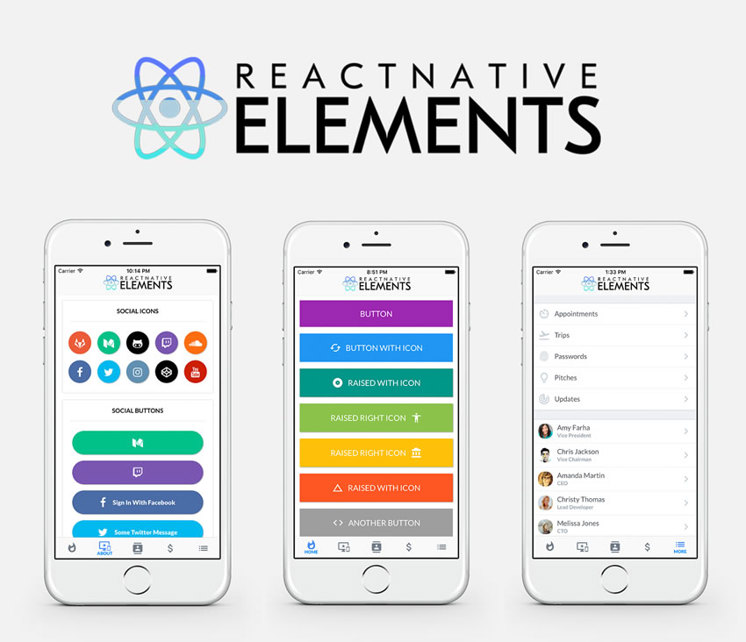
React Native is a fast pick-up for someone that is very vast in JavaScript. It allows any front-end web developer to become an instant mobile developer. With the knowledge of platform APIs, some native UI elements, JavaScript, and some other stage explicit structure designs, you’re good to go because there is no need anymore to learn iOS’s Swift or Java for Android.
React Native’s library features the following apps: debugging, inline styling and Flexbox CSS styling. The library also supports deploying. These apps can be obtained either on Google play or the App Store.
React Native is still new. However, its rate of maturity is very rapid. In fact, Facebook has revealed plans to invest in its extension.
5. React Native Is All About The UI
Building a mobile UI is the principal aim of React Native. React Native is UI-focused. This is in comparison with JavaScript frameworks like MeteorJS or AngularJS. The UI really makes it more like a JavaScript library than a framework.
Besides, the resulting UI is highly responsive. With mobile UI, there is faster browse times and a smoother feel than a normal hybrid app.
6. Native App Development Is Much More Efficient
Native app development is characterized by less developer efficiency and inefficiency. However, the speed and dexterity of web application advancement to the hybrid space.
Facebook’s popular ReactJS UI library for web applications is under React Native’s hood.
React Native features:
- ReactJS’s better app performance
- DOM abstraction
- Simplified programming methods
7. It Offers Outsider Or Third-Party Module Compatibility, Less Memory Usage, And A Smoother Experience
With Outsider modules mean you won't need to depend on a WebView for specific capacities. For instance, assuming you want to add Google Maps functionality to your app, React Native will assist you to link the module with a native plugin, to enable you link the map up with the device’s functions like rotate, compass and zoom, while using little memory and browsing faster. Older operating systems helps to keep the application running fluently, however, this will be possible if your app supports them.
There are diverse Mobile App tools you can choose; however, it is very tough to develop them. Besides, in order to reach the largest audience, it is very important for Mobile Apps to support multiple platforms. This is where the Hybrid app framework takes the position.
There is a wide gap between the performance of a native application and the ease of development of a web application. This is what Hybrid app frameworks have come to bridge. In fact, Hybrid Apps have won the hearts of so many app developers.
It is expected that very soon, Hybrid Apps will rule the application development industries across the globe. Obviously, it is a good choice for new developers.
Why Royex Technology Is the Best Partner for Hybrid Mobile App Development
Hybrid mobile apps are becoming the first choice for many businesses. But building a successful hybrid app requires skill, patience, and a deep understanding. This is where Royex Technology stands out. Our team builds apps that load quickly, feel intuitive, and run smoothly on both iOS and Android. We focus on a clean user experience and reliable features that match real business needs. Our approach is always clear and practical, which helps clients feel confident at every step.
What sets us apart is our ability to blend strong technical expertise with real-world thinking. We do not rush through development. We take time to learn how the business works, what the users want, and what the app must deliver. This is one reason many clients trust us as their long term tech partner. Many businesses look for a Mobile App Development Company in Dubai that can build hybrid apps with reliable performance. We deliver on this need by leveraging modern frameworks like React Native with precision and care. Our process minimises errors and ensures the app stays stable as it scales.
We also support clients long after the launch. We guide them through updates, improvements, and new features. Our support team responds fast and always tries to find simple solutions. This helps businesses save time, reduce stress, and keep the app ready for new users. When you read more about hybrid app development and the benefits of using React Native for it, it becomes clear that the right partner can make a big difference. We are that partner because we combine experience, skill, and a genuine interest in helping businesses succeed in the digital space. We have worked with more than 300 clients globally since 2013. We have developed over 50 mobile apps of all kinds so we have the skill and expertise to deliver you a quality finished product that will grow your business. You can call us for details +971566027916
FAQs
1. What is React Native, and why choose it for a hybrid app?
React Native is a JavaScript library for building mobile user interfaces. It lets one code in JavaScript while rendering real native UI components on both iOS and Android. That means you get a native look and feel without writing two full native apps.
2. Will one React Native app run on both iOS and Android?
Yes. A single React Native codebase can target iOS and Android. The same component often maps to a native counterpart on each platform. That saves time and keeps the app consistent across devices.
3. How close is React Native to a true native app in performance?
React Native compiles components into native views. That gives a smoother feel than web-view-based hybrids. For most apps, the user sees fast screens and a responsive UI. Heavy CPU tasks may still need native modules.
4. Can I add React Native to an existing native app?
Yes. You can drop React Native UI components into an existing iOS or Android app. This means you don’t have to rewrite the entire app. You can migrate parts over time.
5. What about reusing code from the web or other hybrid frameworks?
React Native is component based. If you already have JavaScript logic, some parts can be reused. Cordova based plugins or modules can also be integrated with effort. However, UI code from a web page often requires adjustments to fit native layouts.
6. How easy is it for a web developer to learn React Native?
If you know JavaScript and React, the jump is small. This involves learning some platform APIs and native layout rules, including Flexbox. Many front-end developers become productive quickly.
7. Are there limits to third party libraries and native device features?
React Native supports third party native modules. That lets you use device features like maps, camera, and sensors. In some rare cases, you may need to write a tiny native bridge if no module exists.
8. How does React Native handle app UI and styling?
React Native focuses on UI. You build screens with components. It uses a CSS-style approach for styling along with Flexbox. The result is an interface that feels smooth and native.
9. Is React Native stable for production apps?
Yes. Many production apps use React Native. It is actively maintained and growing. Both large companies and a wide community of developers stand behind it. That creates a strong ecosystem and ensures long-term support.
10. When should I not use React Native?
If your app requires ultra-low latency graphics or intensive background computations, native code might be a better choice. Also, if you rely on a very platform specific UI design, fully native builds can be simpler. For most business and consumer apps, React Native is a strong choice.